


Computer vision development services for UK businesses
Computer vision can be transformative, but messy data and unstable performance often slow teams down. Vention’s bespoke computer vision services help UK companies overcome those challenges and deliver reliably, without delays or rising costs.
With AI-enabled teams, accountable delivery, and clear day-to-day communication, you get the engineering peace of mind to move faster than competitors and see real returns from every computer vision project.
Trusted by companies that build what’s next
Computer vision use cases
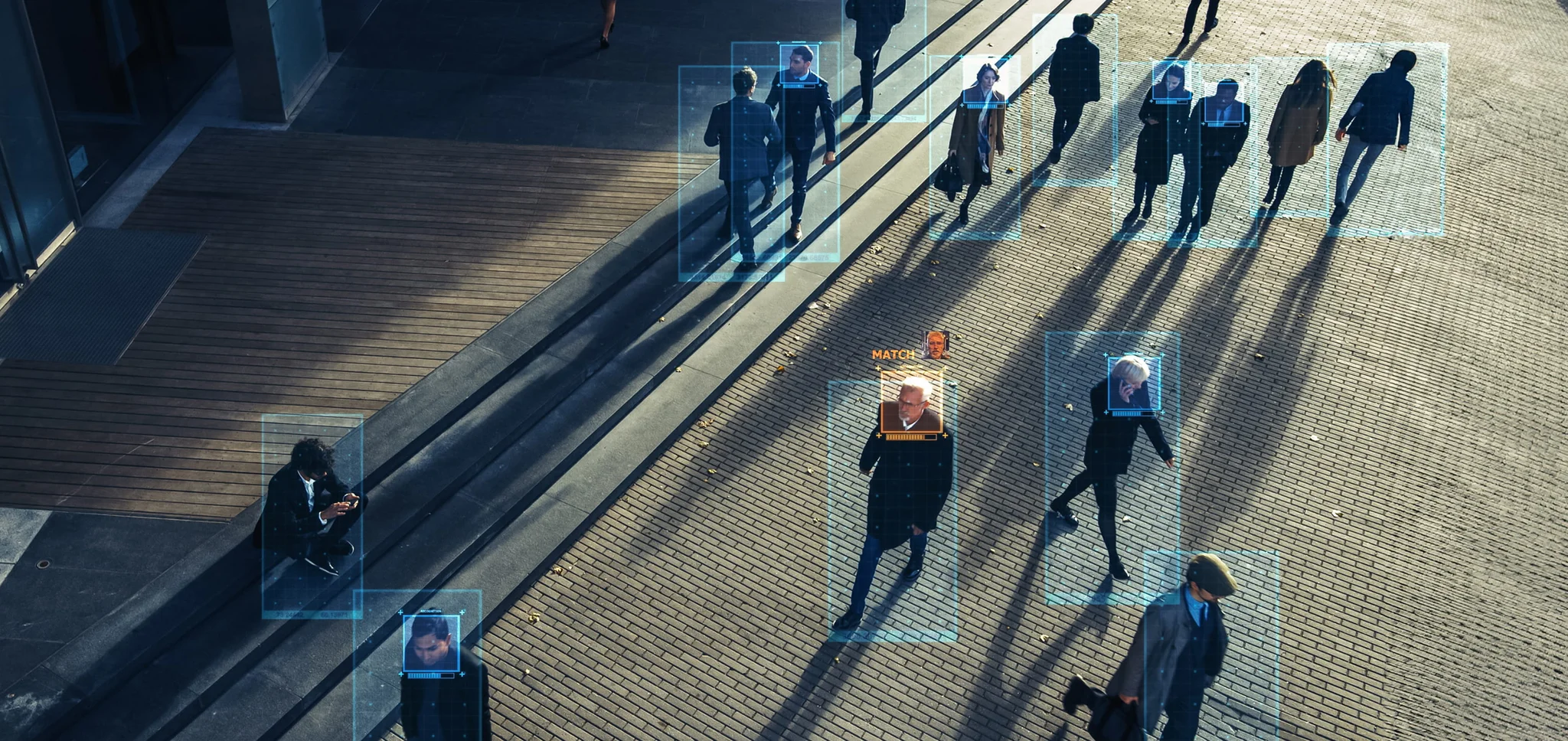
Exploring practical ways to apply computer vision? Or curious about what Vention can do for you? Either way, in the list below, we’ve gathered key computer vision use cases to inspire your next step.
- Optical character recognition (OCR): Convert text detected in images or scanned documents into a digital format, streamlining workflows and reducing manual data entry.
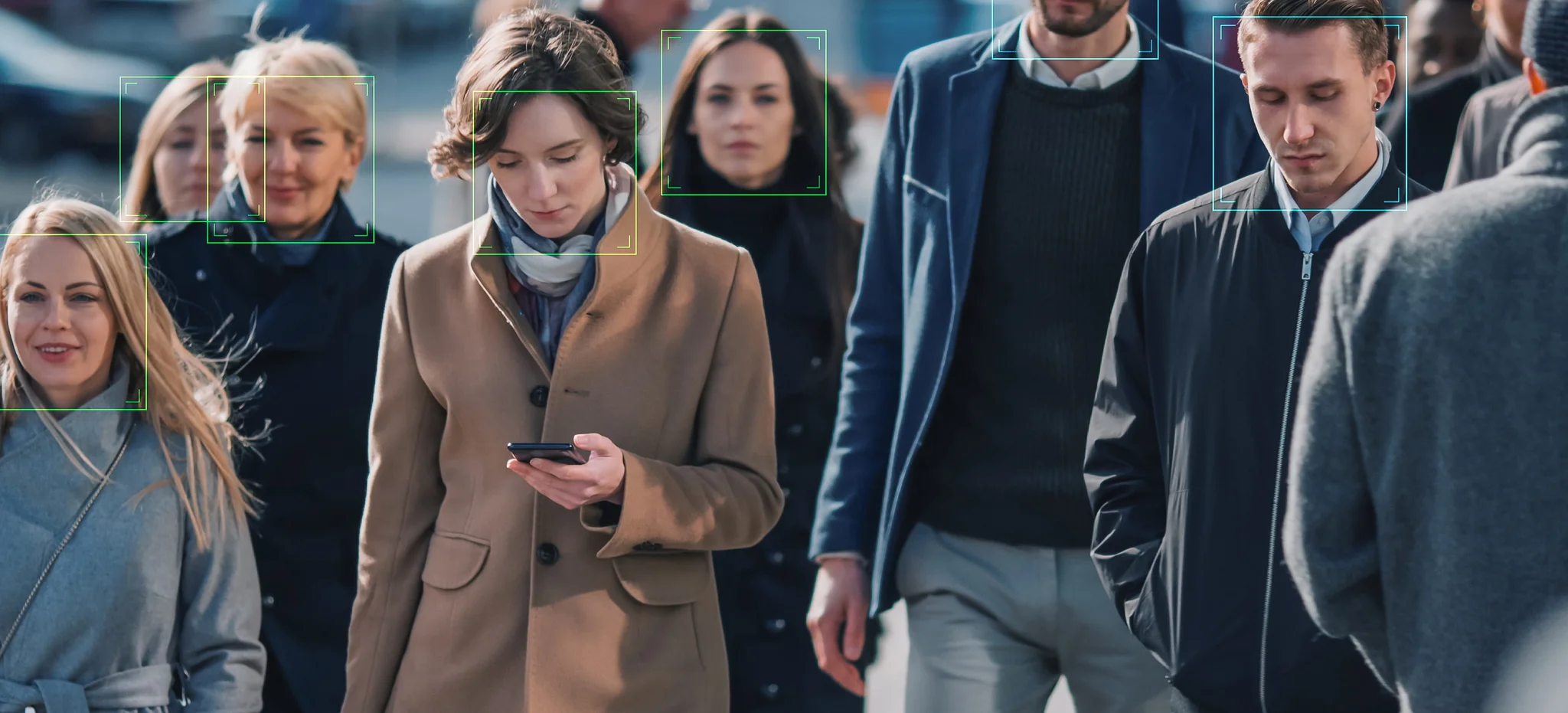
- Facial recognition: Instantly authenticate users to strengthen security and deliver personalised experiences.
- Pose estimation: Identify, track, and analyse body posture and movement patterns.
- Activity recognition: Detect, monitor, and interpret human actions and behaviours, both in real time and from recorded footage.
- Anomaly detection: Identify visual deviations in products, processes, or environments.
- Spatial analysis and 3D vision: Understand and reconstruct complex environments to simulate real-world scenarios.
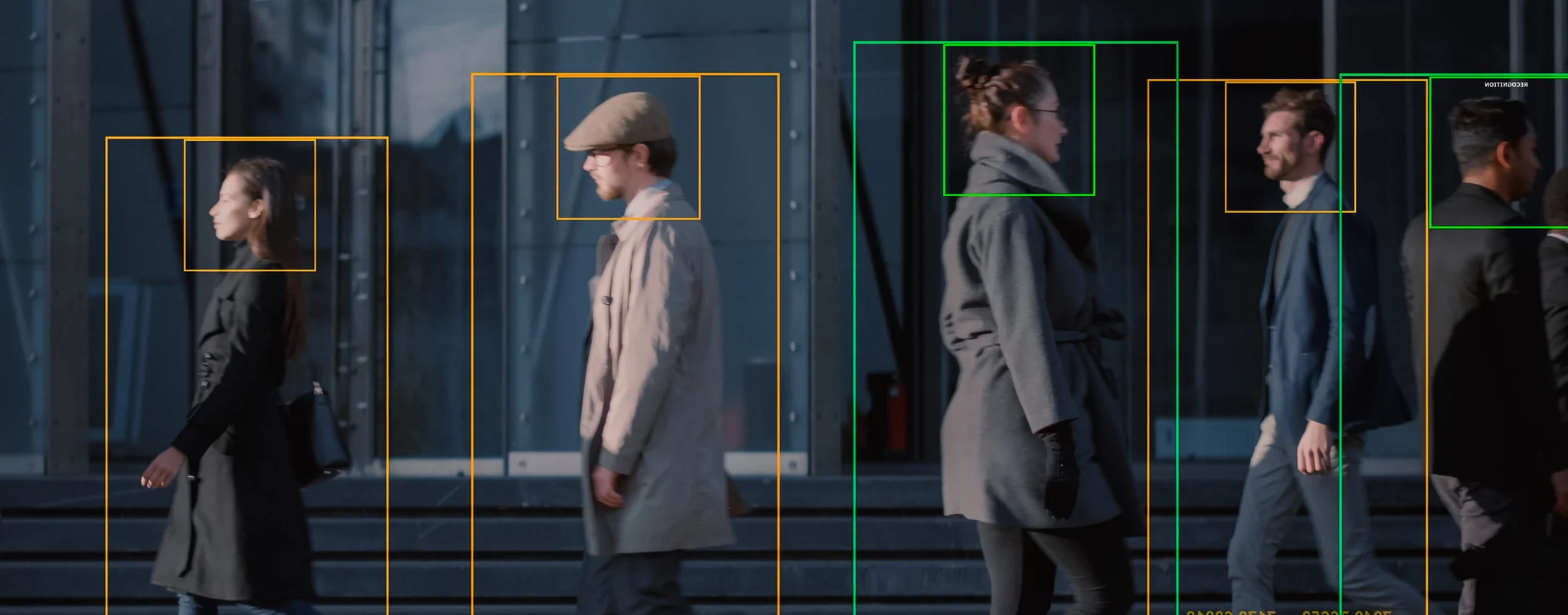
- Object tracking: Continuously follow item, people, or vehicle movement within dynamic scenes.
Our computer vision software development services
Computer vision development services are about designing and delivering robust, future-ready vision systems in close collaboration with a proven AI engineering partner. That’s exactly how we work at Vention.
Computer vision consulting
Thinking twice before investing in computer vision technology is the best insurance for your money. Vention helps break down the technical, economic, and operational nuances of computer vision adoption by outlining a step-by-step computer vision strategy and giving answers to the most critical questions you have:
- Is our computer vision idea feasible, and how can we effectively implement it?
- How to ensure that our custom computer vision solution does not violate compliance rules?
- What technologies will be most optimal to support our idea?
- What ROI can we expect?
- What data do we need for our computer vision model, and how do we prepare it?
- How long can the implementation process take?
Computer vision software development
We build custom computer vision solutions that leverage relevant, modern technology to deal with every task you need, from optical character recognition, object detection, and tracking to visual anomaly detection, spatial analysis, and 3D vision. Our end-to-end computer vision development process includes:
- Discovery and requirements gathering
- Defining the data strategy
- Data gathering and preparation
- Model design and training
- Application or service development (if needed)
- Model deployment and optimisation
Computer vision implementation and integration
Vention integrates computer vision technologies into your existing systems and workflows, ensuring complete interoperability. Our team ensures that the technology meets your needs and becomes a seamless extension of your solutions. For example, we can integrate:
- Medical imaging systems with EHR, a telemedicine platform, or lab tools for healthcare
- Industrial IoT systems, with MES, SCADA, and product lifecycle management for manufacturing
- Point of sale with CRM and inventory management systems for retail
- ADAS and telematics with fleet management software for automotive
- KYC, ATM, and document management systems for finance
- Farm management systems with drones and smart irrigation solutions for agriculture
Computer vision system support and model optimisation
Both custom-built and integrated off-the-shelf computer vision solutions require regular updates, fine-tuning over time, and optimisation of AI models behind the system. Our computer vision experts will ensure the lasting success and competitiveness of your solution:
- Continuous monitoring of system performance and health
- Troubleshooting issues
- Tuning model parameters to improve accuracy and reduce latency
- Retraining models with new or expanded datasets
- Adapting models to changing operational conditions
- Ensuring seamless updates without disruption to operations
Custom computer vision solutions for your industry
With hands-on experience across more than 30 industries, we at Vention understand the nuances of your domain, enabling us to move quickly without revisiting the foundations of your field.
Healthcare
- Analyse medical images for early detection and disease diagnosis, e.g., eye scans, X-rays to detect lung cancer, MRI and CT brain scans to detect tumours, and skin and breast images.
- Monitor patients effectively, e.g., detect falls or unauthorised access, or identify when vulnerable patients leave their rooms unexpectedly, triggering alerts for healthcare workers.
- Monitor healthcare staff to ensure they wear protective gear and use hand sanitiser, maintaining compliance with hygiene standards.
- Monitor and analyse facial expressions to detect and evaluate pain, agitation, and sedation levels.
Manufacturing
- Control the quality of materials and assembly parts to catch defects, cracks, dents, or improper assembly, increasing accuracy and throughput while reducing reliance on manual inspections.
- Enable industrial robots with vision to perform repetitive tasks or challenging manufacturing activities that are difficult for humans.
- Monitor adherence to safety protocols, such as PPE use, and detect unsafe conditions or operator distractions in real time to prevent accidents.
- Enable predictive maintenance of industrial equipment by spotting anomalies on lines before they become issues.
- Track materials, inventory, and product flow with real-time object detection and barcode/OCR recognition.
Automotive
- Encourage safe driving by tracking signs of driver fatigue and distraction.
- Improve safety and comfort with a real-time vision-based advanced driver assistance system (ADAS).
- Identify lanes and traffic signs to support navigation.
- Detect pedestrians, vehicles, and obstacles to avoid collisions.
- Enable autonomous driving through continuous environmental mapping and object tracking.
Retail
- Introduce computer vision-based self-checkout to streamline payments and reduce queues with automated product recognition.
- Recognise products on shelves and monitor product availability to notify when replenishment is needed.
- Track and analyse customer behaviour, dwell time, and product interactions to optimise store layout and route traffic to promotional zones.
- Improve in-store security by detecting suspicious behaviour and shoplifting in real-time.
Transport and logistics
- Scan and identify package labels, barcodes, and QR codes to automate sorting processes, speed up shipping, and ensure accurate routing.
- Get automated guided vehicles (empowered with computer vision) to navigate warehouse aisles and handle repetitive tasks such as item transport and palletising, improving warehouse efficiency and reducing delivery times.
- Monitor conveyor belts, robotic arms, and other equipment for early signs of wear and tear, enabling timely maintenance and preventing costly breakdowns.
- Use vision-based safety systems to detect hazards like spills or obstructions, as well as to reduce collisions between workers and forklifts.
- Inspect assets (roads, rail tracks, ports, and equipment) and cargo and freight for damage or defects to reduce inspection time and prevent costly delays.
- Collect and analyse visual data from onboard cameras, drones, and roadside sensors to plan efficient delivery routes, avoid traffic congestion, and monitor vehicle activity for better asset utilisation.
Finance, banking, and insurance
- Use facial recognition and document verification for secure customer identification and compliance with KYC regulations.
- Automate cheque processing, deposit, and signature verification with computer vision, recognising handwriting and cheque details.
- Enhance ATM and branch security with real-time behaviour monitoring and identity validation.
- Automate data extraction (from printed or handwritten forms, ID cards, and legal documents) and data entry, and reduce manual workload.
- Increase the accuracy and automate accident photos and property damage claims to speed up claim approval and detect fraud.
Construction and real estate
- Benefit from automated computer vision-enabled real-time tracking of the construction process on site.
- Continuously monitor workers to ensure compliance with safety gear (e.g., wearing hard hats or vests) and detect unsafe activities or hazards.
- Combine computer vision with sensor data to assess material conditions, detect wear and damage, and predict equipment maintenance needs.
- Apply computer vision to support generative design, modelling, and construction planning, which improves design efficiency.
- Create immersive real estate tours.
Agriculture
- Monitor crop health through drone imagery to detect early signs of disease, pest infestation, and nutrient deficiencies, and ensure timely treatment.
- Enable precision agriculture to ensure precise application of fertilisers, pesticides, and irrigation.
- Collect and analyse crop images to estimate crop yields and predict harvest timing.
- Enable smart farming with vision-guided autonomous tractors and robots.
- Track livestock and assess animal health remotely.
Curious to see how computer vision could elevate your business?
Join us for an in-depth product discovery workshop. Together, we’ll pinpoint the strongest use cases for your idea and map out a clear, winning path to implementation.
Hear from our expert
Good computer vision performance requires ongoing effort.
Everybody wants a computer vision system that performs well. And when a new solution is successfully deployed, it often feels like the hard part is over. In reality, deployment is just the beginning.
Log analysis, human-in-the-loop reviews, and periodic performance audits are essential to keep things on track. Automating parts of this monitoring process is a smart way to stay in control without spending excessive time. It helps you catch model drift, detect data anomalies, and act quickly when adjustments are needed.”

Yauheni Suvitau
AI Engineer at Vention
Our case studies


Preclinical imaging analysis platform for an optical imaging company
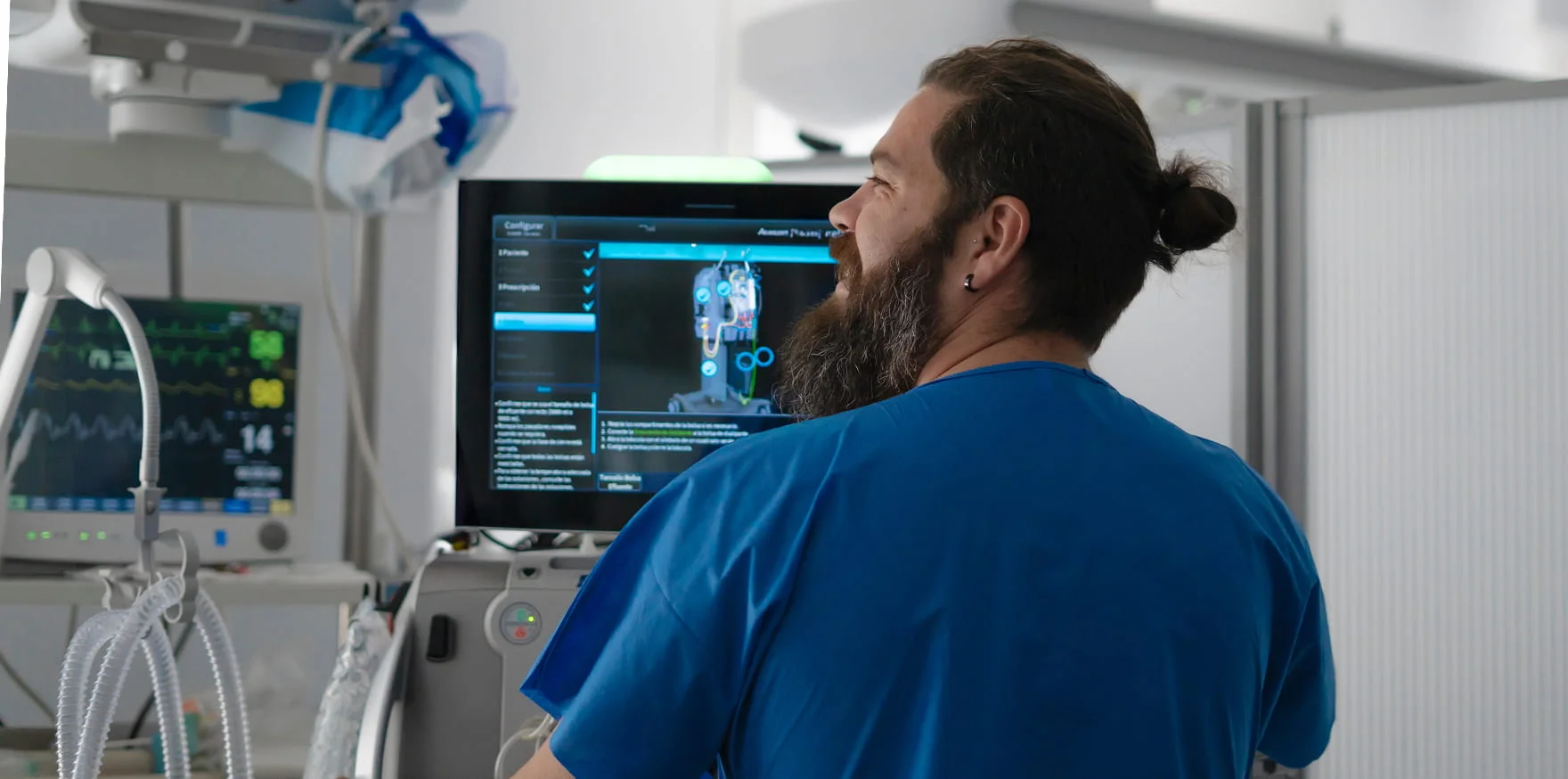
To simplify preclinical imaging analysis, we built a platform that identifies regions of interest in luminescent images. It also enables seamless image merging and shape refinement, which helps researchers work more efficiently and move studies forward faster.
Ready to create your computer vision story?
It’s time to see your roadmap, goals, and outcomes more clearly, and bring them to life with Vention.
Hear from our expert
There’s no one-size-fits-all set of KPIs to measure computer vision success.
While we've outlined the building blocks of a strong system, what defines “success” depends entirely on the use case. For example, quality inspection focuses on catching defects, so you track missed defects, false alarms, and processing speed.
In facial recognition for access control, success means only granting access to the right person. That involves balancing false acceptances and false rejections.
We work with you to define the best-fit use cases and clarify what success looks like for each one. With the right KPIs in place, we design and deliver a system that meets your goals and exceeds expectations.”
Yauheni Suvitau
AI Engineer at Vention
How Vention turns your visuals into reliable, actionable insights
From the moment visuals are captured to the moment they are transformed into precise, meaningful outputs, we design every step of our computer vision development services to be secure, reliable, and ready to withstand the real world, not just perform well in the lab.
Image capturing
Strong outcomes begin with strong inputs. Every effective computer vision system starts with acquiring the right images or videos, whether they come from real-time camera streams or archived datasets.
Our computer vision experts recommend the best approaches to achieve high-quality visuals and maintain consistency. And when you’re dealing with images or videos that are already captured, we guide you through storage, transfer, and processing options that enable high-performance computer vision at scale.
Image preprocessing
Raw visuals often vary in lighting, quality, and environmental conditions, which can strain AI models and limit the accuracy of your outcomes. To avoid this, captured visuals undergo a tailored preprocessing workflow that ensures consistency across all inputs.
To design the right preprocessing pipeline for your system, we assess the nature of your data, the conditions under which images are captured, and your business objectives. Preprocessing usually includes steps such as lighting normalisation, resizing, cropping, and noise reduction.
Image analysis
Your objectives determine what happens next. Most AI-driven visual analysis draws from these three foundational techniques:
- Object detection, which implies identifying and locating objects within an image or video.
- Classification, when an AI model assigns detected objects to particular categories.
- Segmentation, which implies assigning a label to every pixel in an image to precisely separate objects and regions.
- Keypoint detection, when an AI model identifies specific landmark points on an object to capture its structure, position, or movement.
These methods underpin the most common computer vision use cases, such as OCR, facial recognition, pose estimation, activity recognition, anomaly detection, and spatial or 3D analysis.
Based on your needs, Vention defines the right modelling approach, prepares and labels high-quality datasets, trains and validates models, and continuously refines their performance as your system scales and evolves.
Our approach to computer vision development services
Computer vision is only as strong as the engineering behind it. Accurate models, dependable software, secure pipelines, and consistent data define success far more than ambition alone. Vention brings all of this together, providing the engineering peace of mind needed for meaningful, long-lasting impact.
Strong AI model
We shape the model around the actual problem you are solving, not the other way round. Vention selects the most relevant and appropriate model that complies with UK regulations, fine-tunes and adapts it to operate effectively in your environment and with your data. All to maximise accuracy, resilience, and adaptability once the model is deployed in production.
Reliable software
Vention handles the end-to-end development of your computer vision solution. Our team defines the best architecture for your case, writes clean, readable code, creates robust user interfaces, and sets up MLOps workflows while rigorously testing the solution’s performance in real-world conditions.
You get a system that meets your needs, exceeds expectations, and seamlessly integrates with your existing workflows.
High-quality data
Our engineers assess whether your existing visual datasets can support accurate model performance. Where gaps or inconsistencies appear (and they often do), Vention helps enhance your data through techniques such as synthetic data generation, label refinement, and the anonymisation of sensitive visual information. We also help collect and label more data when needed.
Compliance and security
Trust is essential when working with visual data, especially when handling sensitive information. Vention embeds security and compliance into every layer of your computer vision application, aligning workflows and data pipelines with the UK GDPR, the Data Protection Act 2018, and ICO guidance.
We adhere to privacy-by-design principles, ensure data anonymisation for model training, incorporate access controls, encrypt data during storage and transfer, and secure your CI/CD processes.
Why choose Vention for your next computer vision project? See for yourself
Years of experience in bespoke software development
AI professionals with deep AI expertise
AI projects successfully delivered
Industries covered
Strategic partnership with AWS, Microsoft, and Google Cloud
Robust security practices validated with an ISO 27001 certification
A dedicated AI Centre of Excellence that nurtures engineers on the latest tools so you get smarter solutions
"Peace of Mind Promise," a written commitment built around fast kickoff, frictionless scaling, dedicated advocates for your project, and signature assessments
Testimonials
Vention supported the design and development of the WiseOwl MVP, an AI-powered school library platform.
Following discovery, their team began sprint-based development to deliver key components, including AI integration for content classification and age-appropriateness and a student ID/DOB verification system (no SSNs). Vention’s project management has been highly responsive and professional. What impressed me most was that Vention didn’t just act as order takers... they approached the project like true partners. Their team brought thoughtful questions, creative problem-solving, and a clear understanding of our goals. They contributed strategic thinking, not just execution, and that made a huge difference in shaping the product.”

Jeff Frey
Testimonials
The quality of their engineers is phenomenal.
They recently built an AI agent with Ph.D.-level research and development skills; the result was a breakthrough for that industry. We’ve generated several recommendation engines for products in the VR space and are near selling a start-up built with Vention resources. The dynamic feels like they’re a part of my team, not outside vendors.”

Paul Steckler
Testimonials
Vention has played a critical part in the development effort that’s complemented our internal resources.
One of the advantages of working with Vention is not only their deep bench and skill set, but also the ability to tap into specific development needs as the use case arises. With our team, they’ve helped develop algorithms that help predict value for our customers’ assets, while at the same time creating the aggregation technology and machine learning to discern value very quickly. At a high level, Vention delivers outstanding quality on time and on budget, which is all we can hope for.”

Christopher Vroom
Testimonials
We are advertising technology. Our goal was to build our complete platform and enhance it with AI.
We gave them an idea and some designs, and Vention turned it into our platform that 1000's of our clients use daily. What I find most impressive is their ability to take our idea and make it real quickly without lots of back and forth and explanations.”

Joe Marino
Cooperation models for your every need
Alongside secure, efficient AI solutions, Vention uses proven internal AI tools to improve delivery speed by 15 per cent, without compromising compliance or data control.
Technologies Vention uses to empower your computer vision software

Let’s turn your computer vision idea into your next standout solution
We’d be delighted to welcome you to our London office to discuss your computer vision project, or (if it’s easier) we can schedule a call with our UK team.
Churchill Place
London E14 5RE, UK
FAQs
Do you develop custom models or use pre-trained ones?
As a computer vision development company, Vention does both. It depends on what will serve you best. We typically begin by evaluating high-quality open-source models, as they enable us to validate feasibility quickly and minimise early costs. If they perform well, we fine-tune them to your specific needs.
But if your use case requires something more specialised, or existing models simply can’t deliver the accuracy you need, we’ll build and train a custom model from scratch.
How long does it take to deliver a working solution?
Timelines depend on your use case, the complexity of your solution, data readiness, the required feature set, and integration needs. Most clients get a scoped PoC within 4-8 weeks to validate the technical feasibility of an idea. During the discovery stage, we define a clear roadmap with milestones, so you always know what’s coming next.
What if we don’t have enough labelled data?
Lack of labelled data isn’t a blocker. Data analysis is an integral part of our bespoke computer vision development services, so we support you with your data strategy. In case your dataset is too small or unbalanced for stable model performance, we’ll identify it early and take the necessary steps to minimise data bottlenecks, ensuring your model performs reliably in real-world conditions.
Can you scale the solution in line with our needs from an MVP to a full-scale solution?
Absolutely. That’s exactly what our standard process is: we start small with an MVP and incrementally scale the product, ensuring optimal time to market and minimising risks. We also have direct experience supporting clients as they scale from an MVP to unicorns and beyond, guiding their products through each stage of growth with the right technical depth and delivery structure.
How can we measure the ROI from our computer vision project?
ROI metrics are tied to your operational or commercial goals and are typically informed by such performance metrics as reduced manual effort, lower error rates, improved throughput, faster decision-making, and new revenue opportunities.