


Software development services for medical devices in the UK
Vention is a software development company with 20+ years of healthcare expertise, helping UK medical device manufacturers and medtech companies create connected medical devices, software as a medical device (SaMD), companion apps, digital therapeutics, and clinical software. Our engineers combine IoMT connectivity, AI, interoperability, and cloud infrastructure to deliver bespoke software that meets UK MDR requirements and aligns with MHRA guidance.
Vention works with UK medical device manufacturers, SaMD and digital health companies, healthcare providers, and established healthtech enterprises to develop, modernise, and scale complex medical software. We support the full medical software lifecycle, from product discovery and architecture to device connectivity, healthcare system integration, software engineering, QA, deployment, and long-term product evolution.

What makes Vention a strong healthcare partner
Vention combines broad healthcare engineering experience with specialised expertise in regulated and connected software, giving medtech companies access to engineers who understand healthcare-specific requirements, clinical workflows, security, interoperability, and the realities of building products for regulated environments.
Proven healthcare expertise
- 20+ years of bespoke healthcare software development
- 200+ healthcare projects delivered for companies like Thirty Madison, Dialogue, Healthera, Doctors Without Borders, K Health, Alight, and RethinkFirst
- 250+ engineers with healthcare and life sciences expertise
Specialised medical device engineering
- Experience developing connected medical devices, SaMD solutions, companion apps, and IoMT platforms. For example, Vention supported a global medical device manufacturer in developing a next-generation robotic surgery platform for minimally invasive procedures
- Expertise in AI, interoperability, cloud infrastructure, cybersecurity, and healthcare integrations
AI-enabled engineering and technology partnerships
- Proprietary 5-Stage AI SDLC Maturity Model, which helps teams reduce production bugs by up to 30% and save 5-10 hours per task
- Founding partner of the BMad Method and an OpenAI Services Partner, bringing AI-native engineering practices that improve delivery efficiency by up to 2-3x
- Partnerships with Microsoft AI Cloud, AWS Advanced Consulting, Google Cloud, Salesforce, and Snowflake
Flexible delivery models
- Discovery workshops, dedicated engineering teams, staff augmentation, project-based delivery, and CTO as a Service
- Backed by our Peace of Mind Promise, we provide each engagement with a clear collaboration structure, including a dedicated UK-based Delivery Manager and Strategic Partner to support delivery, enhancing accountability and predictability
- Explore everything about our engagement models on our Vention Way web page
Regulatory compliance and security
- ISO 27001-certified information security management supporting the protection of sensitive healthcare data and software throughout delivery
- QA and testing across the development lifecycle, including functional, integration, usability, performance, security, regression, and automated testing
- Experience supporting IEC 62304-aligned development and documentation, including test plans, test scripts, verification and validation activities, system-level test protocols, test results, and traceability
- UK regulatory requirements considered throughout development, including UK MDR 2002 and relevant MHRA guidance for software that qualifies as a medical device or SaMD
Medical device development services at Vention
Product discovery and technical strategy
Medical device development starts with clear product requirements, technical feasibility, and a realistic delivery plan. Vention helps medtech teams define product scope, validate concepts, map clinical and user workflows, evaluate technology choices, and identify regulatory considerations before engineering begins.
Discovery engagements typically produce solution architecture, implementation roadmaps, cost estimates, risk assessments, and delivery plans. For organisations exploring AI, our AI discovery workshops identify high-value use cases, assess data readiness, and prioritise implementation opportunities.
For example, Vention helped a medical device startup turn a concept for connecting custom patient-monitoring sensors to mobile devices into a defined product by defining the product path, user workflows, interface requirements, and UI/UX prototyping before moving into full-stack development.
End-to-end bespoke software development for medical devices
Vention engineers software across every layer of a medical device ecosystem, from embedded and device software to clinician and patient applications, cloud platforms, and healthcare integrations. Our teams design solution architecture, build backend and frontend systems, connect medical devices through Bluetooth Low Energy (BLE) and IoMT protocols, integrate HL7, FHIR, and DICOM standards, and implement secure cloud infrastructure, APIs, DevOps, quality assurance, and cybersecurity.
Whether extending an existing platform or building a new product, we help healthcare companies connect devices, applications, and clinical systems into reliable, interoperable software that scales with evolving product and regulatory requirements.
Dialogue, for example, partnered with Vention to build a virtual clinic with automated patient management, chatbot-based pre-screening, and a secure multi-account AWS environment that supported the company's growth through a $100 million IPO.
SaMD development services
Vention develops SaMD solutions for disease screening, diagnostics, remote patient monitoring, chronic disease management, digital therapeutics, and clinical decision support. Our engineers support every stage of development, from product architecture and AI integration to verification, validation, cloud infrastructure, and post-launch enhancements, helping medtech teams deliver secure, high-performance software for regulated healthcare environments.
For one healthcare client, Vention transformed an early-stage concept into an FDA-approved, AI-powered surgical-assistance platform. The solution included five core software modules, including a computer vision engine for real-time surgical procedure analysis, a Microsoft HoloLens application projecting patient-specific 3D anatomical models during surgery, and AI-powered operating room analytics that reduced operating room preparation time by 23%.
Legacy modernisation
Vention modernises legacy medical device software through cloud migration, application re-architecture, code refactoring, AI integration, interoperability upgrades, and connected-device enablement. Our engineers improve scalability, maintainability, security, and operational resilience while keeping critical healthcare systems running with minimal disruption. Depending on your product, we also support validation, technical documentation, cybersecurity improvements, and standards such as IEC 62304, ISO 13485, ISO 14971, HL7 FHIR, and DICOM.
For instance, Vention modernised a legacy medical device operations platform used by manufacturers, distributors, and healthcare providers, migrating its architecture from ASP.NET and jQuery to ASP.NET Core and Angular, establishing CI/CD pipelines, and providing production support for software that manages surgical cases, orders, assets, and consignment inventory.
With Eddii, Vention engineers introduced code review practices and refactored the legacy mobile codebase to make it more consistent, testable, and scalable as the diabetes management product evolved.
Mobile apps for medical devices
Vention develops native iOS, Android, and cross-platform mobile applications for connected medical devices, remote patient monitoring, digital therapeutics, patient engagement, virtual care, and clinical workflows. Our mobile engineering teams build applications that integrate with wearables, IoMT devices, cloud platforms, and healthcare systems while supporting interoperability, security, and reliable clinical data exchange.
For a medical device startup, Vention developed an iOS application that connected custom remote sensors to mobile devices via Bluetooth to display sensor readings, store collected data, and transfer it to central servers for processing and analysis.
Maintenance and enhancement
Vention provides long-term engineering support that keeps healthcare products secure, performant, and aligned with evolving business and regulatory requirements. Our teams deliver feature development, performance optimisation, cloud infrastructure management, DevOps, cybersecurity, interoperability enhancements, QA automation, and third-party integrations.
A Life in a Day partnered with Vention to expand its application with AI- and AR-powered medical condition simulations across iOS and Android, supporting the client's evolving product roadmap.
Over a 4.5-year partnership with Dialogue, Vention continuously enhanced and optimised its virtual care platform, supporting a 5x traffic surge and reducing heavy query latency from 60 seconds to under 30 milliseconds.
Our work in healthcare and medtech
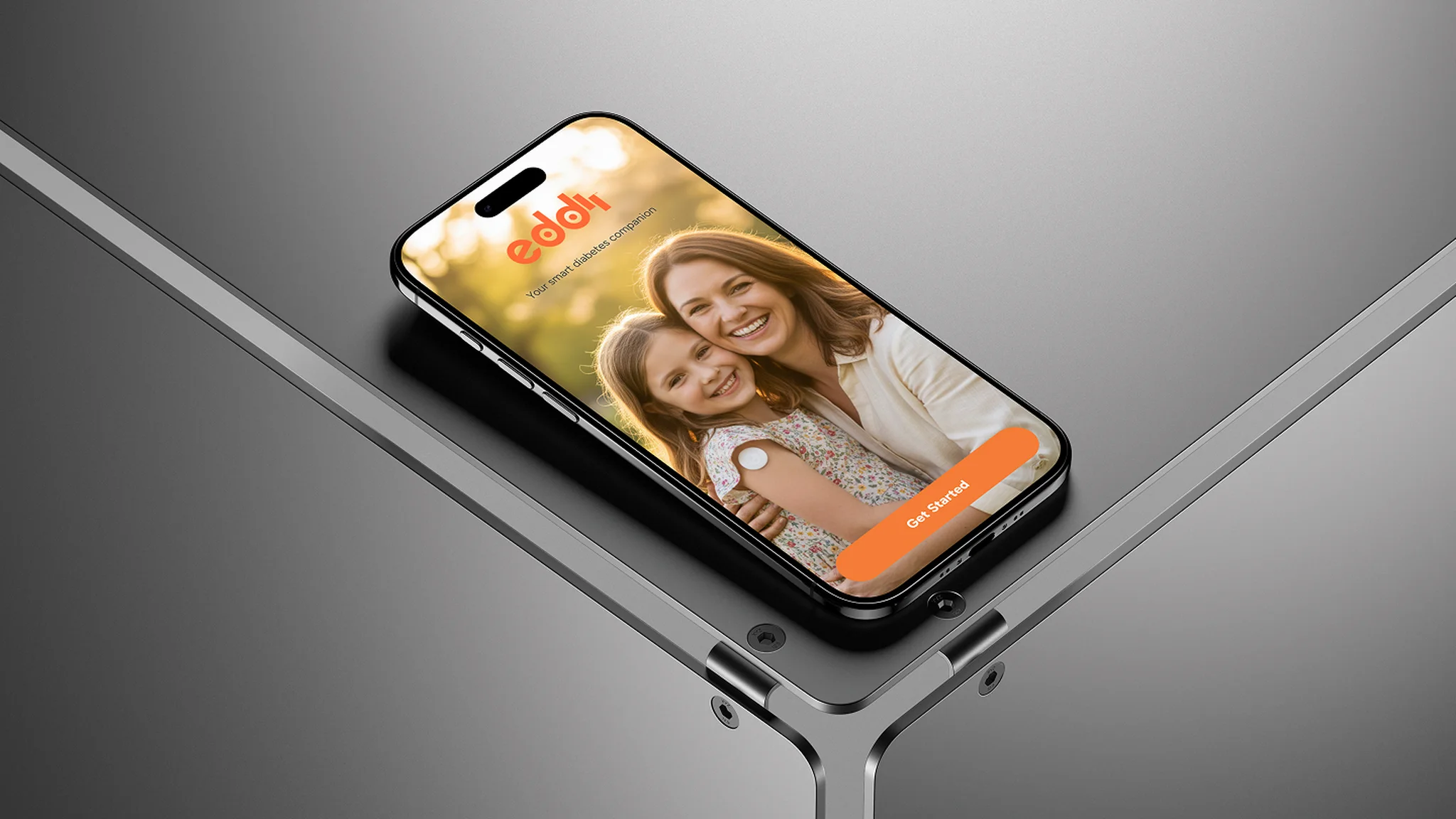
Eddii: Building a gamified diabetes management app connected to real-time glucose data
Challenge
Eddii needed iOS and Android applications that integrated with a continuous glucose monitoring (CGM) device, enabling children to track blood glucose data through an engaging, gamified experience.
How Vention helped
Vention engineers developed and enhanced Eddii's iOS and Android applications using React Native and Node.js, integrating the mobile experience with CGM data and building gamified functionality around an interactive virtual assistant. The team also refactored the legacy codebase, improved medical data storage, implemented one-time password (OTP) authentication and treatment-related push notifications, integrated Google Analytics, and moved image delivery to AWS to improve application performance and screen navigation.
Results
Delivered production-ready mobile applications connected to real-time CGM data, improving application performance while expanding the platform with gamified health tracking, analytics, and support for English, Spanish, and Portuguese.
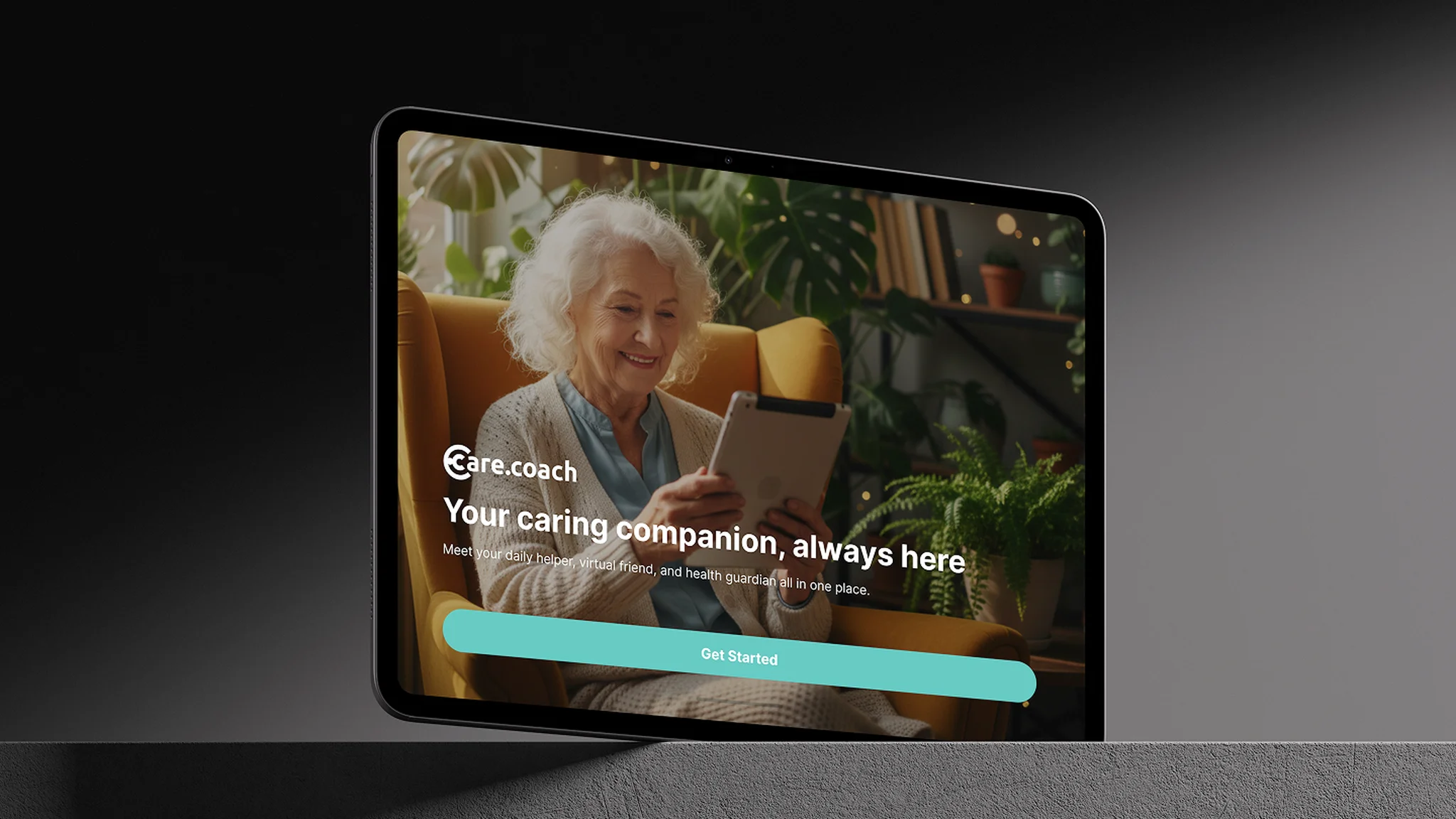
Care.Coach: Scaling a connected healthcare platform for chronic care and telehealth
Challenge
Care.Coach needed a scalable, connected healthcare platform that supports remote patient monitoring, telehealth, and Android-powered care devices.
How Vention helped
Vention engineers developed and optimised Care.Coach's connected healthcare platform, including the VideoVisits Android application for one-to-one and group consultations, auto-scaling video processing services, and remote setup and management of patient devices.
The Vention team also developed an admin panel to manage devices, patients, and customers, implemented an emergency alarm feature to contact an ambulance or healthcare provider, and deployed OpenVidu on Microsoft Azure to support group calls while reducing infrastructure costs.
Results
Delivered a scalable connected care platform with auto-scaling telehealth capabilities and improved device management, contributing to a 20% increase in the client base.
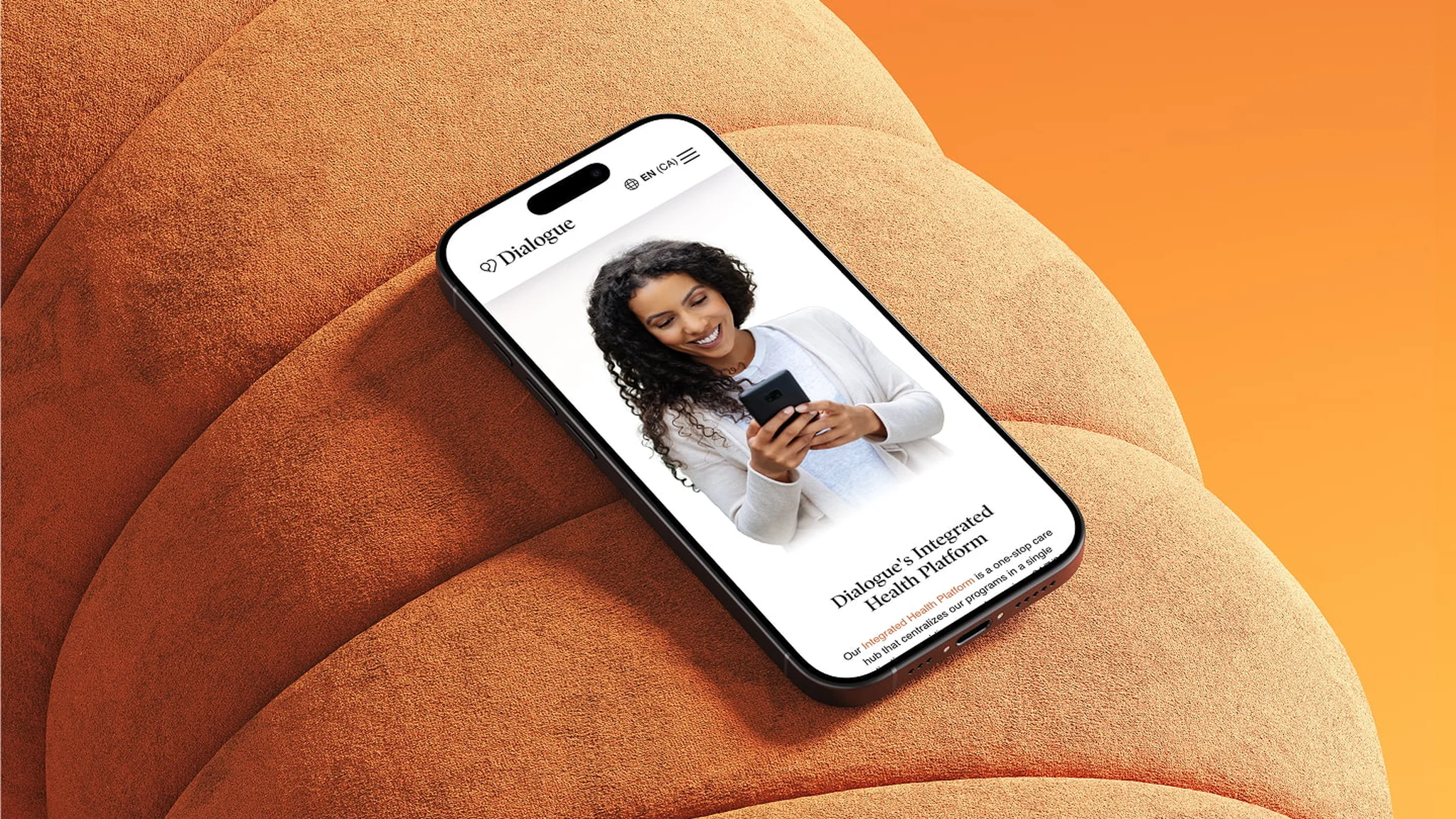
Dialogue: Scaling a virtual care platform from Series A to IPO
Challenge
As Dialogue expanded its virtual healthcare platform, it needed additional engineering capacity to scale patient management, automation, and cloud infrastructure while strengthening security and compliance.
How Vention helped
Vention engineers developed critical virtual clinic features and implemented chatbot-based preliminary patient screening to automate parts of the care journey.
The team also deployed a secure, multi-account AWS environment and supported Dialogue's preparation for SOC 2 certification, strengthening the platform's infrastructure and security as the business scaled.
Results
Supported Dialogue's growth from Series A to a $100 million IPO, strengthening platform security, infrastructure, and automation while supporting more than 25,000+ organisations.
Need to modernise or scale your medical device software?
Vention combines deep medtech expertise with proven engineering capabilities to help healthcare organisations develop secure, compliant, and scalable software.
Bespoke medical device solutions Vention delivers
Solution | What we build | Business value | Typical use cases |
|---|---|---|---|
Software as a medical device (SaMD) | We develop standalone software that performs medical functions without being part of a physical device, including AI-powered clinical decision support, diagnostics, patient monitoring, and digital therapeutics. | Supports faster diagnosis, informed clinical decisions, improved patient outcomes, and compliant product delivery. | Hospitals, outpatient clinics, diagnostic centres, chronic disease programmes, digital health providers. |
Connected medical device software | Our engineers create software that connects medical devices to companion applications, cloud platforms, and healthcare systems, enabling secure data exchange and device management. Case in point: Vention developed an iOS application for a medical device startup that connected custom remote sensors to mobile devices via Bluetooth, displayed and stored sensor readings, and transferred the data to central servers for processing and analysis. pharmacy partners. | Improves interoperability, simplifies device management, and enables connected care. | Infusion pumps, connected diagnostics, patient monitoring systems, wearable medical devices. |
Mobile apps for medical devices | We build native and cross-platform mobile applications that work with connected medical devices, wearables, and companion products to support patients and clinicians. For Eddii, Vention developed iOS and Android applications that integrate with continuous glucose monitoring data for day-to-day diabetes management. | Improves patient engagement, simplifies data capture, and supports care beyond the clinic. | Companion apps, Bluetooth-enabled medical devices, remote patient monitoring, patient engagement, medication adherence, telehealth. |
Internet of medical things (IoMT) platforms | Vention engineers develop secure connected platforms that integrate medical devices, wearables, mobile applications, EHR systems, and healthcare infrastructure into a unified ecosystem. For Dialogue, Vention built a secure cloud infrastructure supporting virtual care, patient management, and chatbot-based triage. | Centralises clinical data, enables real-time monitoring, improves operational efficiency, and simplifies connected care. | Connected hospitals, home healthcare, remote patient monitoring, smart medical devices, population health programmes. |
Clinical workflow and healthcare platforms | Vention builds digital platforms that streamline clinical operations, integrate healthcare systems, and improve collaboration across care teams. For Dialogue, Vention helped scale a virtual clinic with automated patient management and preliminary chatbot screening, supporting the platform from Series A through its $100M IPO. | Improves operational efficiency, reduces administrative burden, and enhances care coordination. | Telemedicine, virtual care platforms, patient portals, clinician dashboards, care pathways, scheduling systems. |
Medical imaging and mixed reality solutions | We deliver imaging platforms and AR, VR, and MR applications for clinical planning, surgical guidance, and medical education. For one healthcare project, Vention developed a mixed-reality application that converts CT and MRI scans into interactive 3D anatomical models, enabling clinicians to explore anatomical structures and tissue layers from multiple angles for surgical visualisation. | Improves surgical planning, enhances clinical training, and supports better patient outcomes. | Surgical planning, Microsoft HoloLens applications, radiology, preclinical imaging, medical education, anatomical visualisation. |
Healthcare interoperability and integrations | Our engineers help you create integration layers that connect EHR/EMR systems, connected medical devices, cloud platforms, laboratory systems, and third-party APIs. For Careforth, Vention delivered API integrations that connect Salesforce with the client’s custom application, Iterable, and major insurance providers, helping to streamline processes and data exchange across platforms. | Eliminates data silos, improves interoperability, and enables seamless clinical workflows. | HL7/FHIR integrations, EHR/EMR connectivity, PACS, laboratory systems, pharmacy platforms, healthcare APIs. |
Advanced capabilities for next-generation medical devices
AI and machine learning
Vention develops AI-powered healthcare solutions for clinical decision support, medical imaging, workflow automation, predictive analytics, and natural language processing (NLP). Our expertise spans computer vision, retrieval-augmented generation (RAG), generative AI, and AI-enabled SaMD applications.
For one healthcare client, Vention developed an FDA-approved, AI-powered surgical assistance platform featuring real-time computer vision and AI-powered operating room analytics that reduced operating room preparation time by 23%.
IoMT and connected device engineering
Vention builds IoMT platforms that connect medical devices, wearables, sensors, and healthcare systems through secure cloud infrastructure, Bluetooth Low Energy (BLE), edge computing, and real-time data streaming.
For Aavia, Vention redesigned Bluetooth connectivity between a mobile application and a hardware device, improving functionality and enabling reliable health logging.
Big data and healthcare analytics
Vention designs healthcare data platforms that unify operational and clinical data to support reporting, analytics, automation, and AI-driven decision-making.
For Alight, Vention modernised a healthcare data platform that processes hundreds of files and millions of healthcare records while automating healthcare workflows.
AR, VR, and mixed reality
Vention develops augmented, virtual, and mixed reality applications for surgical planning, clinician training, patient education, and medical visualisation.
For one healthcare client, Vention built a Microsoft HoloLens application that projects patient-specific 3D anatomical models during surgery, helping clinicians visualise organs, inspect tissue layers, and plan complex procedures with greater precision.
Vention’s approach to AI-enabled healthcare engineering
"The competitive edge in healthcare is shifting from individual features to how intelligently the entire product operates. AI can interpret clinical data, connected devices can extend care into patients' homes, and interoperable platforms can bring those signals into clinical workflows. However, none of that creates value if the underlying software is difficult to validate, secure, integrate, or scale.
As a medical device software development company, Vention engineers AI-enabled healthcare products while applying AI throughout the software development lifecycle. We use AI across requirements, architecture, development, testing, and quality assurance, while our engineers remain responsible for architecture, security, validation, and every critical decision. We measure success through delivery speed, quality, reduced rework, reliability, and time to market.
For healthcare companies, the result is a clearer path from promising technology to software that's ready for real-world clinical environments."

Mikhail Dashuk
Healthcare Engineering Manager at Vention
Technology stack Vention uses to build software for medical devices
Layer | Technologies |
|---|---|
Backend | .NET/.NET Core, C#, Java, Spring Boot, Node.js, Python, Go, Ruby on Rails |
Frontend | React, Angular, Vue.js, Next.js, TypeScript |
Mobile | Swift, Kotlin, React Native, Flutter, Objective-C, Android SDK |
AI/ML | Python, TensorFlow, PyTorch, OpenCV, Scikit-learn, Azure AI, computer vision, NLP, Retrieval-Augmented Generation (RAG), Generative AI, large language models (LLMs) |
Medical imaging and mixed reality | Unity, Microsoft HoloLens, ARKit, ARCore, OpenXR, 3D image processing, DICOM viewers |
Medical device connectivity and IoMT | Bluetooth/BLE, MQTT, WebSockets, REST APIs, GraphQL, IoT Edge, device-to-cloud communication, wearable integrations |
Healthcare interoperability | HL7, FHIR, SMART on FHIR, DICOM, PACS integration, EHR/EMR integrations, Epic, Cerner |
Cloud and infrastructure | Microsoft Azure, AWS (Lambda, ECS/EKS, S3, RDS), Google Cloud Platform, Docker, Kubernetes, Terraform |
Data engineering and analytics | PostgreSQL, SQL Server, MySQL, MongoDB, Elasticsearch, Redis, Snowflake, BigQuery, Databricks, Apache Kafka |
DevOps and CI/CD | Docker, Kubernetes, GitHub Actions, Azure DevOps, Jenkins, GitLab CI/CD, Terraform |
Testing and quality assurance | Selenium, Cypress, Playwright, Appium, Postman, JMeter, automated regression testing, performance testing |
Cybersecurity and compliance | OAuth 2.0, OpenID Connect, JWT, encryption at rest and in transit, RBAC, SSO, threat modelling, audit logging, UK GDPR, HIPAA, IEC 62304, ISO 13485, ISO 14971 |
Integrations | Stripe, Twilio, SendGrid, Auth0, Firebase, Azure Active Directory, Apple HealthKit, Google Fit, wearable device APIs, third-party laboratory and pharmacy systems |

Medical device software development process at Vention
Stage | What Vention does | Key deliverables |
|---|---|---|
1. Discovery and product strategy | Vention works with product, clinical, engineering, and regulatory stakeholders to define product requirements, intended users, clinical workflows, regulatory constraints, technical architecture, and delivery priorities before engineering begins. |
|
2. UX and software design | Vention’s design and engineering teams create intuitive user experiences and scalable system architecture for clinicians, patients, and caregivers, validating interfaces against clinical workflows before development begins. |
|
3. Medical device software development | Vention engineers build backend services, web and mobile applications, cloud infrastructure, AI capabilities, device connectivity, and SaMD components using modern software engineering practices. |
|
4. Integration and interoperability | Vention engineers integrate medical software with EHR/EMR systems, medical devices, laboratory systems, and third-party platforms using HL7, FHIR, and secure APIs to support reliable data exchange across healthcare ecosystems. |
|
5. Testing and validation | Vention’s QA and engineering teams test functionality, performance, security, usability, interoperability, and regression. For regulated products, Vention can also support traceability, verification, and validation activities where required. |
|
6. Post-launch optimisation and continuous innovation | Upon request, Vention continues supporting the product after launch through feature development, performance and cloud optimisation, AI enhancements, security updates, and ongoing maintenance as business and regulatory requirements evolve. |
|
Vention’s delivery models for your medical device project
Engagement model | Best for | What Vention provides | Typical engagement duration |
|---|---|---|---|
AI and product discovery workshop | Validating a new medical device, SaMD, connected healthcare platform, or AI initiative before engineering begins | Product strategy, solution architecture, technical feasibility assessment, implementation roadmap, regulatory considerations, and cost estimate | 1-3 weeks |
Software modernisation assessment | Modernising existing medical device software, cloud infrastructure, or engineering processes | Architecture review, technical debt assessment, modernisation roadmap, cloud migration strategy, and regulatory readiness recommendations | 2-6 weeks |
Building a defined product with agreed scope, timeline, and milestones | End-to-end delivery covering discovery, design, engineering, QA, validation, deployment, and project management | Fixed scope or milestone-based | |
Dedicated product team (pods model) | Building or scaling a medical device platform over the long term | A cross-functional engineering team tailored to your product, including software engineers, QA, DevOps, UX/UI, architects, AI specialists, and delivery management | Long-term partnership |
Extending an existing engineering team with specialised medical device software expertise | Software engineers, AI specialists, QA engineers, DevOps engineers, architects, or delivery managers integrated into your existing workflows | Flexible and scalable | |
AI-enabled engineering team | Accelerating software delivery through AI-assisted engineering and modern SDLC practices | Senior engineers using Vention's proprietary 5-Stage AI-SDLC Maturity Model, AI-assisted development workflows, automated testing, and AI coding tools | Project-based or long-term |
Managed engineering services | Long-term product evolution after launch | Performance optimisation, security updates, monitoring, maintenance, continuous feature development, and release management. | Ongoing |
What healthcare clients say about working with Vention
Healthcare software projects demand teams that can understand complex requirements, translate them into working products, and collaborate effectively with internal engineering teams.
Across 100+ client reviews on Clutch, Vention is recognised for engineering quality, reliable delivery, and strong collaboration. The clients’ testimonials below show those strengths in practice, from rapid specification and prototyping to legacy software modernisation and long-term team integration.

Anonymous
“From the beginning, Vention approached the project with the right perspective. Their team was interested in engaging in a rapid development cycle, which fits our needs. They were ready to understand and quickly move to the specification and prototype phases. In addition, Vention presented an overall good value.
I was impressed by their ability to understand what was asked and turn the question into functional solutions that accounted for the literal request and potential pitfalls. They delivered a solution that didn’t create additional issues, which I’ve seen when working with other vendors. Vention managed complexity and found efficient, clean solutions.”
Mike Lu
“I am the CTO of Vertical software as a service company for Urgent care centers. Our goal was to Increase velocity. We selected Vention because their pricing fit our budget, they were a strong culture fit, and they offered excellent value for the cost... They always deliver high-quality work in a timely manner. I find most impressive strong engineering working culture and collaborative environment with non technical team members.”
Anonymous
“To help us account for our continued growth, we wanted to recruit experienced software engineers to augment our in-house teams. ...We noticed the range of talent within Vention’s roster and decided to work with their company.
I was impressed with how quickly they were able to integrate into our existing teams. Despite their remote locations, they’re already embedded within our internal operations. They easily adjusted to the dynamic and continue to manage a high level of communication to assure they’re always on pace with our full-time team.”
Anonymous
“Tigertext is the premier clinical messaging system for healthcare providers. We were refactoring older software in order to make it more secure, improve our DevOps and address some bugs. They helped us refactor and modernize 4 of our projects. Vention freed up the rest of the team, allowing them to focus on our primary strategic project, which was time-sensitive.
The ability to reverse-engineer and figure things out blew me away. I was worried that there would be a lot of handholding and downtime, but Vention took on tasks with very little description of what was needed. I could basically spell out what the components and objective were, and, within a day or two, they would have a good start, and always pretty much read my mind.”

Let's meet in London to discuss your medical device software project
Whether you're evaluating a new medical device, modernising an existing platform, or planning your next product release, our UK team is happy to discuss your goals in person or online.
UK contact details:
+44 207 117 2842 30
30 Churchill Place
London E14 5RE, UK
contact@ventionteams.com
Questions medtech teams ask before partnering with Vention
What affects the cost of medical device software development?
The cost depends on product complexity, intended use, number of integrations, device connectivity, documentation needs, cybersecurity requirements, and whether you need an MVP or a production-ready platform. Vention can provide an estimate after a scoping call.
How long does it take to develop medical device software?
There is no fixed timeline for medical device software development. Vention estimates delivery based on product scope, device integrations, regulatory requirements, testing and validation needs, and the maturity of the existing product.
For example, Vention helped a medical device startup move from initial pathfinding and prototyping into development in early 2020, delivering a usable iOS application around early Q3, roughly six months later.
Can Vention develop medical device software in line with IEC 62304?
IEC 62304 is the internationally recognised standard that defines the software development lifecycle for medical device software. It establishes the processes, activities, and documentation required to develop, maintain, and update software safely throughout its lifecycle, helping manufacturers reduce risk and demonstrate regulatory compliance.
How do you support UK GDPR for connected devices and patient data?
Vention develops medical device software and digital health platforms with privacy and security built in from the start, helping organisations meet UK GDPR requirements and industry best practices for handling sensitive health information.
Our engineering teams implement privacy-by-design principles throughout the development lifecycle, including secure software architecture, role-based access controls, encryption of data at rest and in transit, authentication and identity management, audit logging, data minimisation, secure APIs, and infrastructure designed to protect sensitive patient information.
How do you handle cybersecurity for medical device software?
Vention engineers apply secure development practices, architecture reviews, threat modelling, vulnerability management, security testing, access control design, encryption, and DevOps practices that support safer connected healthcare systems.
What documentation and evidence do you provide during development?
Depending on project scope, Vention can support architecture documentation, requirements documentation, test plans, traceability materials, technical specifications, integration documentation, and release-related evidence.
Can Vention help with only part of the development process?
Absolutely. You don't need to outsource your entire product development lifecycle to work with Vention. We regularly join projects at different stages, whether you're validating a new idea, expanding an existing engineering team, modernising legacy software, or preparing a product for launch.
Our specialists can support individual phases such as product discovery, solution architecture, UI/UX design, software development, AI and machine learning integration, medical device connectivity, cloud infrastructure, interoperability, verification and validation, cybersecurity, or post-launch optimisation. We also offer dedicated engineering teams, team augmentation, and end-to-end product delivery, depending on your business needs.