



UrgentIQ: Scaling healthcare software delivery with Claude Code
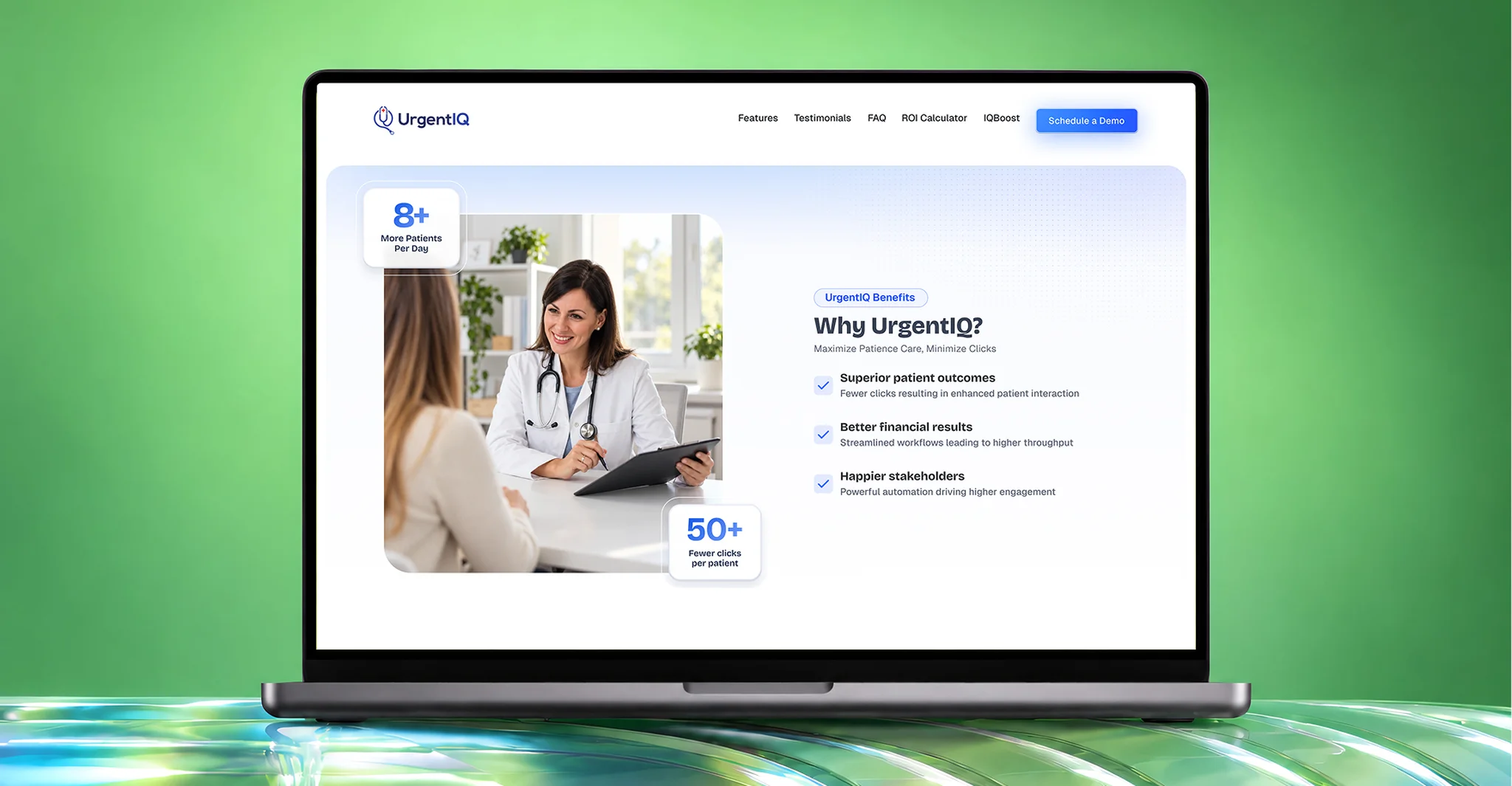
UrgentIQ partnered with Vention to scale the development of its AI-native electronic medical record and practice management platform for urgent care providers.
Working alongside UrgentIQ’s internal team, Vention engineers contributed across frontend, backend, and quality engineering. As the platform and its customer requirements expanded, the team needed a more consistent way to use AI across recurring development tasks without removing engineers from technical decision-making.
Vention integrated Claude Code into the engineering workflow and created 10 project-specific Claude Code Skills across backend and frontend repositories. These Skills codified repeatable processes for feature implementation, testing, database migrations, feature flags, permissions, reference data, and AI observability.
Vention also participated in the experimental evaluation of Claude for UrgentIQ’s diagnosis-code recommendation functionality, using the product’s model-switching capability to assess the quality of recommendations within the existing workflow.
Client
Project description
Our solution
Integrating Claude Code into the engineering workflow
Vention engineers used Claude Code across recurring stages of software delivery, including:
- Understanding requirements and the existing implementation context
- Planning technical changes
- Implementing frontend and backend functionality
- Creating and updating automated tests
- Reviewing pull requests
- Debugging issues
- Preparing technical documentation
- Generating release notes
Claude Code supported the engineering process, while Vention engineers remained responsible for architecture, implementation decisions, code review, testing, and approval.
Rather than relying solely on individual prompts, the team developed project-specific Claude Code Skills that captured the context and steps required to consistently complete common tasks.
End-to-end backend feature implementation
Vention created an implement-story Skill to guide Claude Code through the complete backend feature workflow.
The Skill structures the process from gathering context and preparing an implementation plan through writing the code, creating unit tests, and adding integration tests. This gives Claude Code a repeatable sequence to follow instead of treating each development step as an isolated prompt.
Engineers review the proposed plan and resulting implementation, retaining control over technical decisions and the final code.
Automated test creation
Vention engineers created dedicated Skills for backend integration tests and frontend test synchronization.
The create-integration-tests Skill helps generate commit-ready tests in the backend integration test suite. It follows the project’s existing testing patterns and identifies the setup, actions, and assertions required for the feature under test.
On the frontend, the sync-tests Skill reviews changed behavior and updates the corresponding tests within the same pull request. This helps keep test coverage aligned with the implementation instead of treating testing as a separate follow-up task.
The repositories also include an AI-assisted test-coverage workflow that helps engineers identify behavior requiring additional validation.
Database migrations
Database changes can introduce formatting inconsistencies, migration errors, and unwanted file changes if engineers do not follow the project’s established sequence.
Vention created a db-migration Skill that guides Claude Code through UrgentIQ’s Entity Framework Core migration process. The workflow also accounts for line-ending artifacts that can otherwise create unnecessary changes in generated files.
The Skill gives engineers a repeatable process for creating and reviewing migrations while reducing manual cleanup.
Reference data and vector embeddings
We also developed two Claude Code Skills for workflows involving embedded reference data, used for semantic search.
The add-embedding-type Skill supports the end-to-end process of introducing a new pgvector embedding type. It provides Claude Code with the project-specific structure required to connect the new type to the wider reference-data workflow.
The reference-data-worker Skill guides the creation of a console application or worker that generates and writes reference data with vector embeddings.
These Skills allow engineers to reuse established implementation patterns when extending retrieval and reference-data functionality.
AI feature observability
Vention developed the instrument-ai-feature Skill to make observability integral to AI feature development.
The Skill guides Claude Code through adding OpenInference tracing spans with Arize Phoenix, giving Vention and UrgentIQ engineers a consistent way to capture execution details and investigate how AI functionality performs within the application.
By incorporating instrumentation directly into the delivery workflow, engineers enabled the team to evaluate and troubleshoot AI features without treating observability as a separate post-development task.
Frontend API hooks
We created an api-hooks Skill to support frontend integration with backend services.
When the backend API schema changes, the Skill helps generate or update entity-specific API hooks using the project’s established patterns. It identifies schema changes, applies the relevant template, and generates the frontend code needed to access the updated API.
This reduces repetitive implementation work and keeps the generated hooks consistent with the existing frontend architecture.
Role and permission implementation
UrgentIQ uses role-based permissions to control which users can access specific product functionality.
To support the consistent implementation of these controls, Vention developed the ui-permissions Skill. It guides Claude Code through the complete workflow, from adding permission keys and grant variants to implementing runtime access gates and updating the corresponding tests.
By encoding each required step, the Skill helps engineers introduce restricted features without repeatedly reconstructing the permission workflow or overlooking necessary access controls.
Code review and release preparation
Claude also supported Vention engineers beyond the direct implementation of features.
The project repositories include Anthropic-based workflows for code review, test coverage analysis, and release note generation. These tools help engineers inspect changes, identify areas that require additional testing, and summarize completed work before release.
Vention engineers review the generated output and decide which recommendations or changes should be incorporated into the codebase.
Claude for diagnosis-code recommendations
Vention also participated in the experimental evaluation of Claude within UrgentIQ’s diagnosis-code recommendation workflow.
The feature analyzes symptoms, procedures, and other information recorded during a visit to suggest relevant diagnosis codes. Its purpose is to support accurate code selection and charge capture rather than make a medical decision.
UrgentIQ’s model-switching capability allowed the team to run the same workflow with different models. Vention engineers used this architecture to test Anthropic models and assess the quality of their recommendations.
The team evaluated whether the suggested codes were appropriate for the supplied visit context and used the findings to inform model configuration. Clinicians remain responsible for reviewing every recommendation and approving the final diagnosis and code.
Security-conscious healthcare engineering
UrgentIQ’s platform processes sensitive healthcare information, making security and access control essential to the engagement.
Vention engineers worked in test environments, without production data access. Patient information was removed or blurred in screenshots used for development and issue investigation. UrgentIQ also regularly commissions independent penetration testing of the platform.
Key metric | Details |
|---|---|
10 Claude Code Skills | encoding recurring backend and frontend development processes |
3 Anthropic-based engineering workflows | supporting test coverage analysis, code review, and release note generation |
1 live clinical workflow used to evaluate Claude | comparing Anthropic models within diagnosis-code recommendations |
Results
FAQs
How did Vention use Claude Code on the UrgentIQ project?
Vention engineers used Claude Code to support feature implementation, testing, pull-request review, debugging, documentation, and release preparation.
The team moved beyond individual prompts by creating 10 Claude Code Skills containing project-specific context and workflows. Engineers remained responsible for reviewing the output, making technical decisions, and approving final changes.
What Claude Code Skills did Vention create?
Vention created seven backend and three frontend Claude Code Skills.
The backend Skills support feature implementation, integration testing, database migrations, account-level feature flags, vector embeddings, reference-data workers, and AI observability. The frontend Skills support API hooks, roles, and permissions, and test synchronization.
Was Claude used in UrgentIQ’s product?
Claude was evaluated experimentally within UrgentIQ’s diagnosis-code recommendation workflow.
The product’s model-switching capability allowed Vention engineers to test Anthropic models and assess the quality of suggested diagnosis codes for the supplied visit context. Claude was one of the evaluated options.
The feature supports clinicians with code selection, but healthcare professionals remain responsible for reviewing recommendations and approving the final diagnosis and code.