


Monolith-to-microservices migration
Vention is a software development company that provides monolith-to-microservices migration services for organizations looking to modernize legacy systems and improve scalability and delivery speed without disrupting ongoing operations.
With 20+ years of modernization experience and a global team of 3,000+ engineers, Vention helps companies decompose complex monoliths into well-scoped services through controlled, production-aware migration programs.
Quick facts about Vention
Experience
20+ years in migration services
Global team
3,000+ experts across North America, Europe, and Asia
Project portfolio
Projects for 500+ clients across 30+ industries
Focus on security
ISO 27001 certification
Awards and recognitions
When should companies consider monolith-to-microservices migration?
A monolithic architecture becomes a candidate for modernization when its structure begins to limit product evolution or operational stability.
Vention shares the signals when monolith-to-microservices migration is overdue:
Signal | What you experience |
|---|---|
Accumulating technical debt | Every new feature you want to implement requires substantial effort. Tangled dependencies make the system difficult to evolve. Even small changes put your system at risk of breaking something unrelated. |
Scaling bottlenecks | The system cannot scale individual components independently. Scaling the entire monolith impacts infrastructure costs and limits performance optimization. |
Hiring, onboarding, and retention challenges | You’ve struggled to hire developers skilled enough to build the system. Developers hesitate to work with outdated stacks, undocumented spaghetti code, or deeply coupled systems. Besides that, new engineers often need months to understand the architecture. |
Operational fragility | A single deployment can become a single point of failure. Full-system rollbacks are common. Because deployments affect the entire system, release cycles are slow and risky. |
Our expert: “No clean start is required for monolith-to-microservices migrations”
Most vendors step back from failed modernization attempts or undocumented legacy systems, which is understandable, as these environments often resemble black boxes with hidden technical debt.
At Vention, we don’t expect clients to untangle that complexity upfront. We start with a focused discovery, applying reverse-engineering and incremental refactoring to understand and stabilize the system before moving forward with migration.”

Senior Python/AI Engineer at Vention
How does Vention migrate monoliths to microservices?
Vention structures modernization programs around controlled and incremental architectural decomposition, taking ownership of how the transformation is planned and designed, not just how it is executed. Our migration approach includes six stages.
As-is assessment and reverse engineering
Vention’s solution architects and engineers review the current architecture, dependencies, data flows, and the logic behind core processes. When documentation is missing, and key knowledge about the system is gone with the original developers, reverse engineering helps us understand how the system behaves. Our clients often highlight Vention’s reverse-engineering skills in their feedback: "The ability to reverse-engineer and figure things out blew me away."
Based on discovery insights, we define how to introduce new architecture safely without breaking what works.
Domain-driven design
To avoid inheriting existing dependencies and creating a distributed monolith, Vention’s architects define service boundaries around business capabilities rather than legacy code structure. Extraction priorities are based on production signals such as system load, release cadence, dependency density, and recurring failure patterns.
Early progress often comes from isolating high-load areas such as reporting, search, or ingestion pipelines. Domains with frequent business rule changes, including pricing or eligibility logic, are also strong candidates.
Infrastructure preparation
Before extracting the first service, Vention DevOps engineers establish the infrastructure that will host it, including clusters for runtime isolation and scaling. We also set up per-service CI/CD pipelines to support independent deployments.
Strangler-pattern migrations for monoliths (the approach that Vention favors) require stable routing controls, health checks, autoscaling policies, and rollback mechanisms. Before the cutover, we validate the environment under load to ensure that it does not introduce operational instability.
Incremental migration
In most modernization programs, Vention applies a Strangler approach, where the monolith and newly extracted services operate in parallel. Legacy system maintenance continues as part of standard operations. As we gradually replace capabilities, live operations continue without interruption.
To prevent external disruption during backend refactoring, Vention introduces stable interfaces through facade layers or API gateways. Where internal coupling is high, we use abstraction layers, allowing new services to replace legacy implementations without widespread code changes.
Feature flags enable staged activation and controlled rollback, particularly for high-risk domains. When data ownership transitions to a new service, dual-write strategies or change-data-capture mechanisms may be applied temporarily to maintain continuity while authority shifts to the extracted service.
Testing and validation
Vention tests the legacy system before migration to record the existing behavior as a baseline. During service extraction, automated tests (unit, integration, and contract) help detect unintended changes to business logic before they affect production.
With unit tests in place, engineers can reduce technical debt: we safely refactor, remove dead code, and simplify logic because regressions are caught early.
As each service is introduced, validation continues at multiple levels. Parallel run or shadowing helps us compare legacy and new implementations under real traffic before activation. Contract testing enforces API and event compatibility across service boundaries.
Data migration and integrity
In monolith-to-microservices migrations, Vention addresses the data coupling problem early by defining clear data ownership. Each service manages its own schema or database, and direct cross-service queries are removed. Services access data from other domains through explicit APIs rather than shared tables.
To maintain consistency in distributed systems, Vention uses event streaming platforms and change data capture tools, such as Kafka and Debezium. We also apply tailored consistency strategies for each use case. The strategies balance latency and reliability while preventing data loss or corruption.
Start your monolith-to-microservices migration now
Vention leads migrations end-to-end: we define service boundaries, restructure data ownership, set up infrastructure, and manage controlled traffic shifts.
Let’s discuss how we can help you.
Why businesses choose Vention for monolith-to-microservices migration
Legacy code mastery
Our engineers have hands-on experience working with undocumented codebases, spaghetti code, and outdated frameworks (like early versions of .NET and Java). We revamped a web solution for StoneX and migrated Curve from PHP to Go. One Vention’s differentiator that comes up in client feedback is the strength of our reverse-engineering work: "The ability to reverse-engineer and figure things out blew me away."
Data strategy
We support complex data flows across streaming and data storage layers, including Kafka, PostgreSQL, MongoDB, and data lakes. During migration, we preserve transactional integrity and apply appropriate consistency models based on system boundaries. To enforce clear data ownership and reduce coupling, we follow a database-per-service pattern. Data synchronization across services is handled through event-driven mechanisms rather than direct database access.
Observability as foundational capacity
Vention establishes monitoring, logging, and distributed tracing from the first migrated service, using Datadog as the central observability layer. We trace requests end to end across services to maintain clear visibility into system behavior. We also define service-level health signals to detect issues early and keep the system stable as it evolves.
Automated testing strategies
We treat testing as an integral part of any migration strategy, combining unit, integration, contract, and API tests before and after migration. Pre-migration, these tests capture and preserve existing legacy behavior. After service extraction, they ensure new services remain consistent with expected functionality and interface contracts.
DevOps and CI/CD
With Kubernetes and Terraform as the key technology pillars, Vention establishes production-ready runtime foundations, including container orchestration, per-service CI/CD pipelines, and infrastructure-as-code. We set up independent deployment capabilities early to support incremental change strategies such as canary and blue-green releases, reducing risk during rollout.
Architectural advisory
Vention’s solution architects define the target architecture, determine service boundaries using domain-driven design, select communication patterns (REST, gRPC, event-driven), and plan the decomposition roadmap.
Hear from Vention’s expert
Any migration is a balance between preserving what already works and moving toward something that can scale.
Finding that balance means doing the hard work early: understanding the system, which is often a black box, validating its behavior through testing before, during, and after migration, and rolling changes out incrementally."
Senior Python/AI Engineer at Vention


Client reviews

Ady Levy
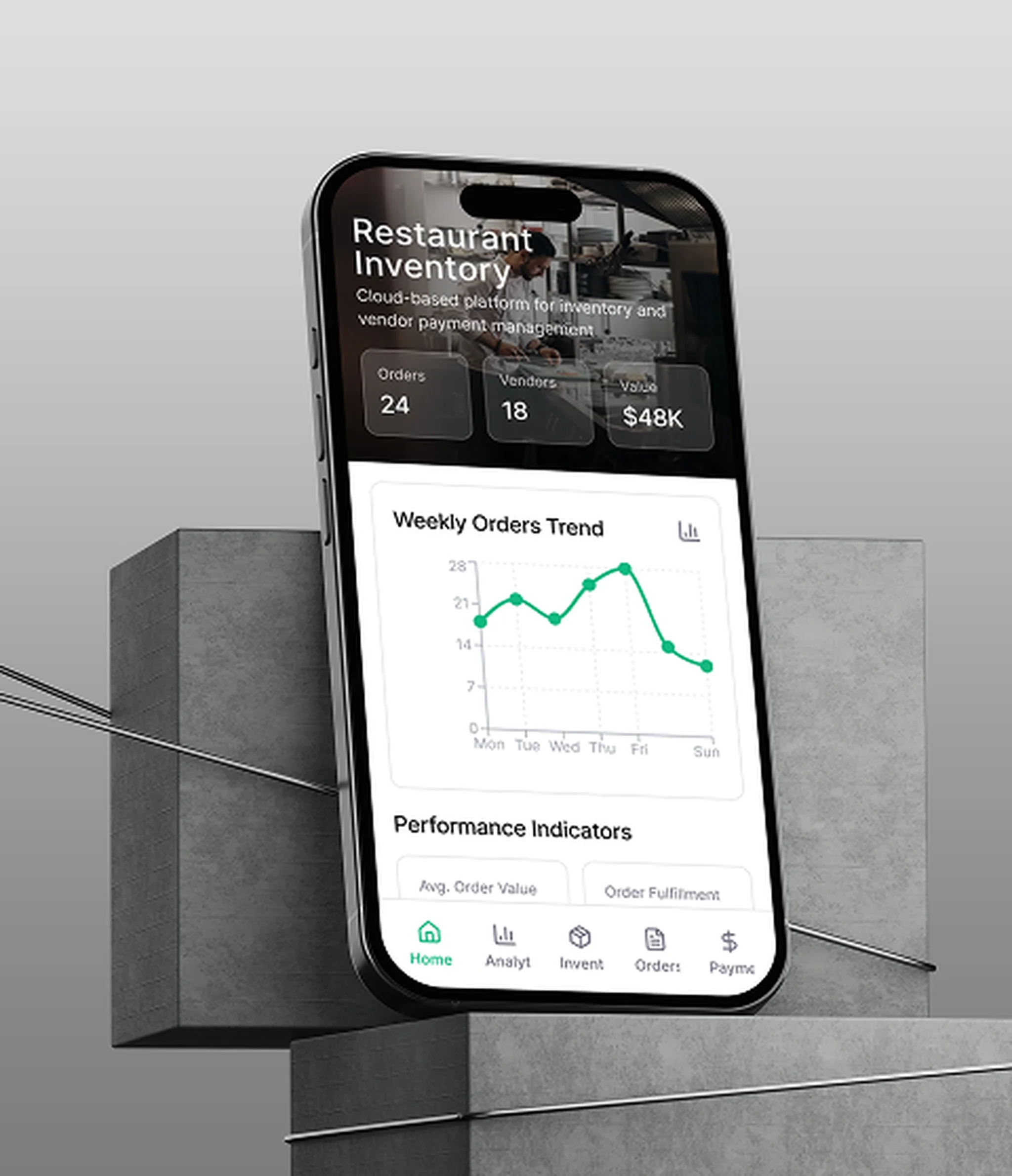
VP RnD, Restaurant inventory platform
“[Vention] created new microservices with unit tests that reduced tech debt and allowed for a cleaner and organized code base. [The most impressive thing about the company is] their exceptional responsiveness, flexibility, and clear communication that make a great positive impact on our projects.”

Geoffrey Teale
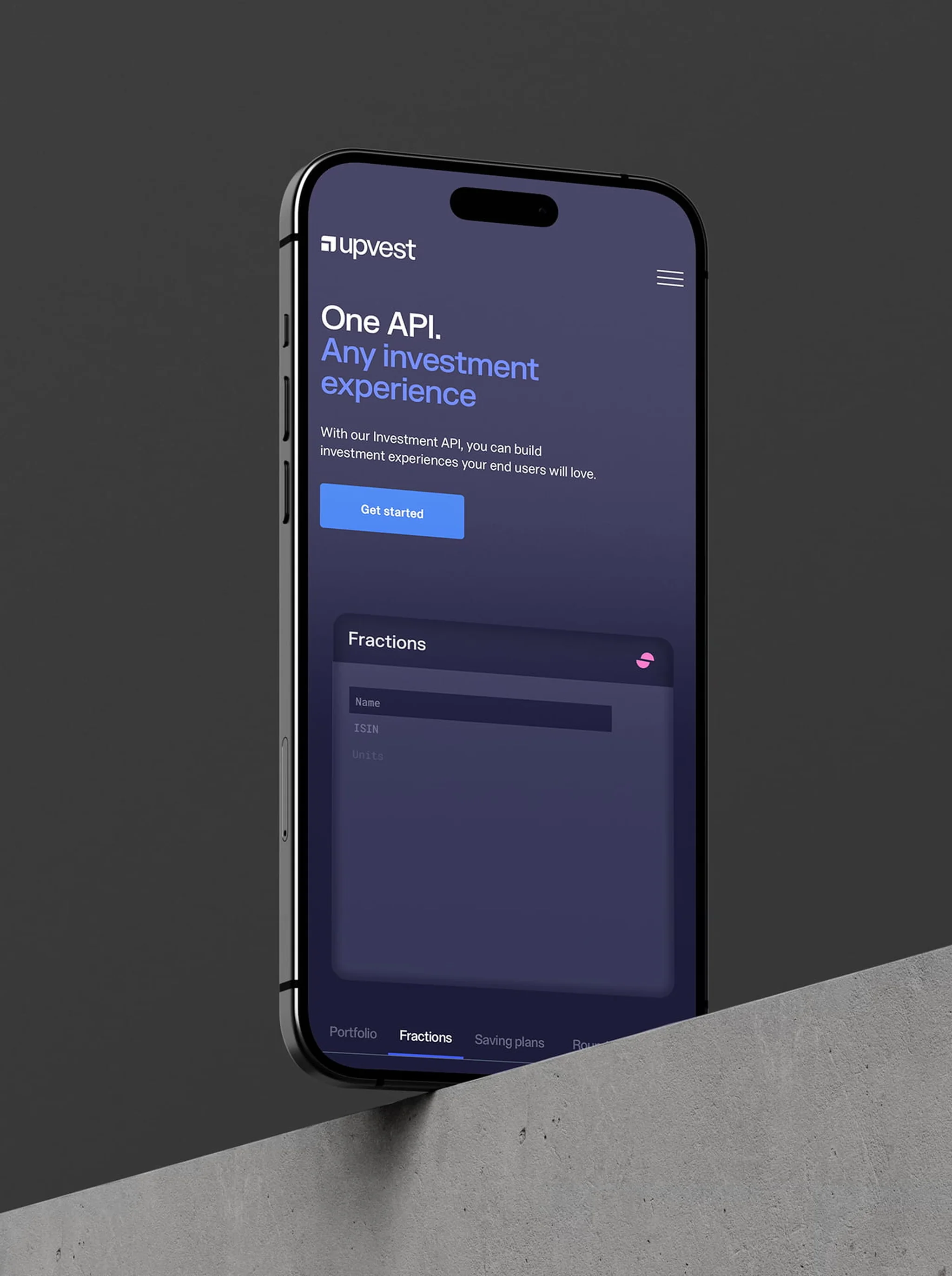
Head of Developer Experience, Upvest
“Together with Vention employees we’ve built and are supporting 19 microservices. In our test environment, we’ve successfully onboarded more than 500,000 users.
The most impressive thing is the way we work together. They've also shown an understanding of the product's impact and developed the functionality taking into account the domain requirements and user experience.”

Jeff Frey
Co-Founder, WiseOwl
"Vention didn't just act as order takers... they approached the project like true partners. Their team brought thoughtful questions, creative problem-solving, and a clear understanding of our goals. They contributed strategic thinking, not just execution."
Common fears about microservices and how Vention addresses them
“Our system will turn into a distributed monolith.”
To prevent a distributed monolith, Vention defines explicit service boundaries and eliminates shared databases or cross-service queries. Services communicate via well-defined APIs and events rather than direct data access, reducing hidden dependencies. Independent CI/CD pipelines and deployment processes ensure that each service can evolve and release without coordination bottlenecks, keeping coupling low in practice.
“Operational complexity will increase.”
Microservices shift complexity from code structure to runtime operations. Instead of one deployable unit, teams manage multiple services, network communication, distributed failures, and independent scaling policies.
To manage this complexity, Vention establishes operational foundations such as per-service CI/CD pipelines, standardized containerization, centralized logging, distributed tracing, and clear ownership models. The result is a better-structured complexity that is observable, measurable, and controllable, rather than hidden inside a tightly coupled codebase.
“Migration becomes an endless money pit with no visible value”
That risk is real when migration lacks scope control, measurable milestones, and business-aligned outcomes. In Vention’s engagements, modernization is structured around incremental value delivery. We measure progress in operational improvements instead of the number of services.
“We won’t be able to switch to a new system without disrupting the operations.”
This concern is common, especially for systems that support live customers, financial transactions, or regulated workflows. In practice, full cutovers are rarely required.
Vention structures migration so that legacy and new components coexist during transition, with traffic shifted gradually rather than switched all at once. We also apply controlled routing, staged rollouts, and validation under real production traffic before expanding exposure.
Technologies used for monolith-to-microservices migrations
FAQs
How does Vention migrate to microservices without risking service disruption?
Vention applies an incremental approach to migration (Strangler fig pattern). The objective is to keep the system live while moving capabilities and traffic in measured steps, with clear rollback paths.
How do you preserve business logic when the legacy system is undocumented?
We reverse engineer the system: study how core processes behave today, map the code paths and dependencies behind them, and turn that behavior into automated tests. Those tests become a safety net: when migration starts, we can refactor or extract services while checking that critical business logic still behaves the same way.
How do you handle data migration across distributed databases?
Vention assigns clear ownership of each dataset to a specific service and removes direct cross-service database access. We migrate the data gradually, allowing the new service to build and verify its own data store while the monolith remains operational.
Do you recommend a "big-bang" rewrite or incremental decomposition?
We strongly advocate for incremental decomposition in almost all cases. The Strangler approach helps migrate safely without disrupting live operations and sees the value early.
How do you keep feature delivery moving during migration?
We separate modernization from ongoing delivery. While one team focuses on extracting services, another continues shipping features and maintaining the existing system.
Do you just code, or do you define the architecture?
Vention’s solution architects design the target architecture, define service boundaries, select service communication patterns, and plan the decomposition roadmap.