


State of AI in software development 2026
Vention State of AI in software development report tracks AI adoption among software professionals, as well as productivity gains, risks, and organizational maturity across engineering teams.
The report combines DORA, McKinsey, Stack Overflow, and Gartner data with Vention Bixa research and Vention proprietary transformation data from client and internal projects. The Vention BIXA research methodology was based on surveying 480 qualified decision-makers from the US, UK, and DACH, actively investing in software development.
Headline finding: 93% of development professionals already use AI. Yet, about 56% of companies deploying AI mention measurable outcomes, suggesting adoption alone is no longer the differentiator.


Key takeaways
- 93% of development professionals already use AI in product or software development, while almost half of developers use AI tools daily.
- 56% of companies cite cost reductions, and 57% report revenue benefits from adopting AI in software engineering.
- 68% of developers save more than 10 hours per week from using AI.
- Vention teams save on average 22% of time per implementation ticket and see a 10-15% reduced effort on code review.
- Developers are using AI, but trust remains a major barrier. Over 45% of developers distrust the accuracy of AI tool output, showing that human review is still essential for production-ready software.
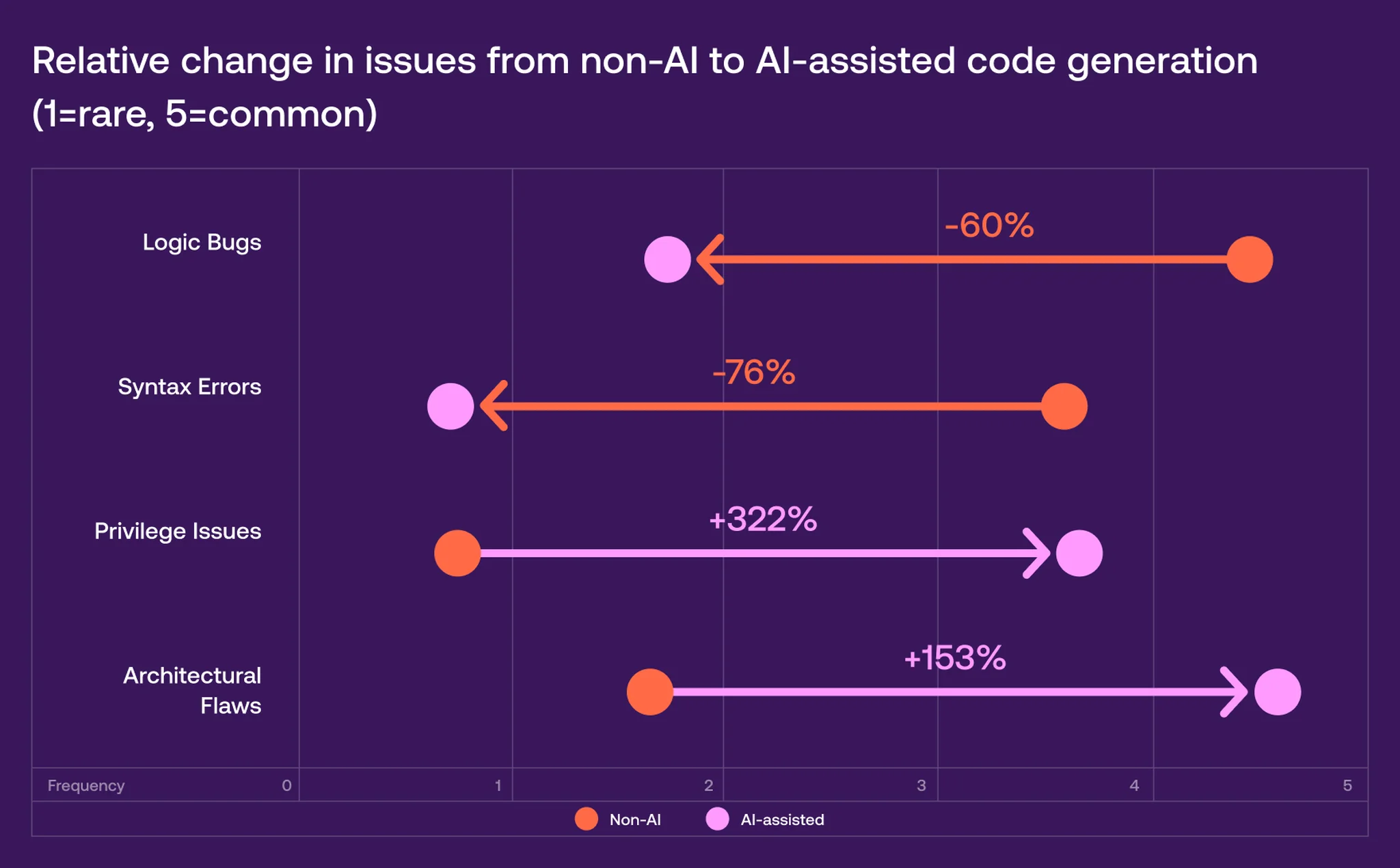
- 36% of companies have concerns about AI-related security and code quality risks: in AI-generated code, syntax errors dropped by 73%, while architectural design flaws spiked by 153%.
The level of AI adoption among software development professionals
The use of AI in software development has now become a new standard. DORA reports that in 2026, 90% of engineers use at least one AI tool at work for coding and development tasks, which is a 14.1% increase from 2024.
Vention’s BIXA research found that 93% of development professionals are already using AI in their product or software development today:
- 80% use AI with internal development resources
- 13% use AI for software development through their software development vendors
[Source: Vention Bixa Research, Q1 2026].
Current levels of AI adoption in product or software development
AI is central to our product
and business strategy
We use AI in specific areas
(e.g., internal automation)
We’re testing AI through
pilots or prototypes
We’re just getting started
and exploring AI use cases
How often do engineers use AI for software development?
On average, almost 50% of developers use AI tools daily. The share of professional developers who use AI daily is higher than that of those who are only learning to code: 50.6% vs 39.5%, suggesting that junior developers are still learning to code themselves, not just copying and pasting boilerplate code.
Frequency of AI usage among developers
Yes, I use AI tools daily
Yes, I use AI tools weekly
Yes, I use AI tools monthly or infrequently
No, but I plan to soon
No, and I don’t plan to
Vention’s CEO insight: “In 2026, code is becoming abundant. Reliable software delivery is not.”
The competitive advantage now lies in the engineering operating system behind the code: business intent translated into executable specifications, engineers orchestrating AI agents across the full SDLC, context and token economics managed by design, and quality, security, cost, and outcomes measured end to end. Most companies are still adding AI tools to yesterday’s development process.
Vention rebuilds the process itself, reducing rework, cycle time, and cost per delivered outcome while increasing execution capacity, predictability, and accountability. This is agentic engineering made scalable, observable, and enterprise-ready."

Sergei Kovalenko
Co-founder and CEO at Vention
AI in software development: market size
By the end of 2026, the global AI spending will reach $2.52 trillion, and the AI code generation market size is expected to grow to $16.13B. By 2031, the AI code generation and developer assistant market is forecast to reach $78.97B, growing at a 37.39% CAGR.
Market | 2025 | 2026 | 2027 |
|---|---|---|---|
AI services | 439,438 | 588,645 | 761,042 |
AI cybersecurity | 25,920 | 51,347 | 85,997 |
AI software | 283,136 | 452,458 | 636,146 |
AI models | 14,416 | 26,380 | 43,449 |
AI platforms for data science and machine learning | 21,868 | 31,120 | 44,482 |
AI application development platforms | 6,587 | 8,416 | 10,922 |
AI data | 827 | 3,119 | 6,440 |
AI infrastructure | 964,960 | 1,366,360 | 1,748,212 |
Total AI spending | 1,757,152 | 2,527,845 | 3,336,690 |
Developer sentiment toward AI tools in software development
AI tool usage in software development continues to grow, yet rising adoption has also revealed new challenges. In 2023 and 2024, more than 70% of engineers viewed AI tools favorably. By 2025, that figure had declined to 60%.
The shift suggests that increased usage does not automatically translate into developer confidence, particularly when AI tools are introduced without clear workflows, standards, or training.
How favorable developers’ stance is on using AI tools as part of the development workflow
Very favorable
Favorable
Indifferent
Unsure
Unfovorable
Very unforable
Can AI be fully trusted for software development tasks?
More than 45% of developers distrust the accuracy of AI tool output. A notable gap remains between skepticism and confidence, with only 32% of engineers expressing confidence in AI tools' results.
An ongoing need for human verification is particularly evident among experienced developers. The group reports the lowest "highly trust" rate at 2.6% and the highest "highly distrust" rate at 20%, making senior engineers the most cautious users of AI tools.
Junior developers show the highest level of "full trust" in AI tools across all seniority groups, at more than 6%.
How much developers trust the accuracy of the output from AI tools
Highly trust
Somewhat trust
Somewhat distrust
Highly distrust

Where developers actually use AI in 2026
On average, engineers spend two hours per day interacting with AI, roughly one-quarter of a standard eight-hour workday.
Most engineers who use AI apply it to idea generation for software features and concepts (55%) and software architecture design (48%), while only 44% use it for coding [Source: Vention Bixa Research, Q1 2026].
Vention's project experience points to a broader shift. The most mature AI adopters no longer treat AI as a coding tool alone. Instead, they integrate it throughout the software development lifecycle, from requirements gathering and architecture design to testing, documentation, code reviews, debugging, and operational workflows.
Projects following structured, specification-driven workflows often report the strongest results. Rather than generating code from isolated prompts, teams increasingly use AI to turn requirements into specifications, break work into tasks, review implementations against defined standards, and maintain traceability throughout the delivery process.
Where is AI currently being used in your development process today?
Idea generation for features or concepts
Software archietcture design
Coding
Design or prototyping
Requirements gathering
QA or Testing
Documentation
Algorithm improvements
Use case | 2024 | 2025 |
|---|---|---|
Code writing | 74.9% | 71% |
Code optimization | 61.3% | 66% |
Documentation | 60.8% | 64% |
Test case creation | 59.6% | 62% |
Debugging | 56.1% | 59% |
Analyzing data | 54.6% | 61% |
Code review | 48.9% | 56% |
Security analysis | 46.3% | 51% |

One notable exception is code generation. The share of developers using AI for code writing declined by nearly four percentage points between 2024 and 2025.
A likely explanation is that developers increasingly view AI as a tool for supporting engineering workflows rather than replacing engineering work. While AI continues to assist with coding, adoption is growing faster in areas such as documentation, testing, code reviews, data analysis, and security analysis.
Vention's experience reflects the same trend. Teams reporting the strongest results use AI across the entire development lifecycle rather than focusing on code generation alone. Structured requirements, specification-driven delivery, testing workflows, documentation, and review processes consistently emerge as some of the highest-value use cases.
The story isn't that developers are using less AI for coding. The story is that AI is graduating from a coding tool into a workflow tool.
How well the AI tools in development workflows handle complex tasks
Very well at handing
complex tasks
Good, but not great at
hadling complex tasks
Neither good or bag
at handling complex tasks
Bad at handling
complex tasks
Very poor at handling
complex tasks
I don’t use AI tools for complex tasks / I don’t know....
AI tools that are mostly used by developers
By January 2026, 74% of developers worldwide had already adopted specialized AI tools, such as AI coding assistants and agents.
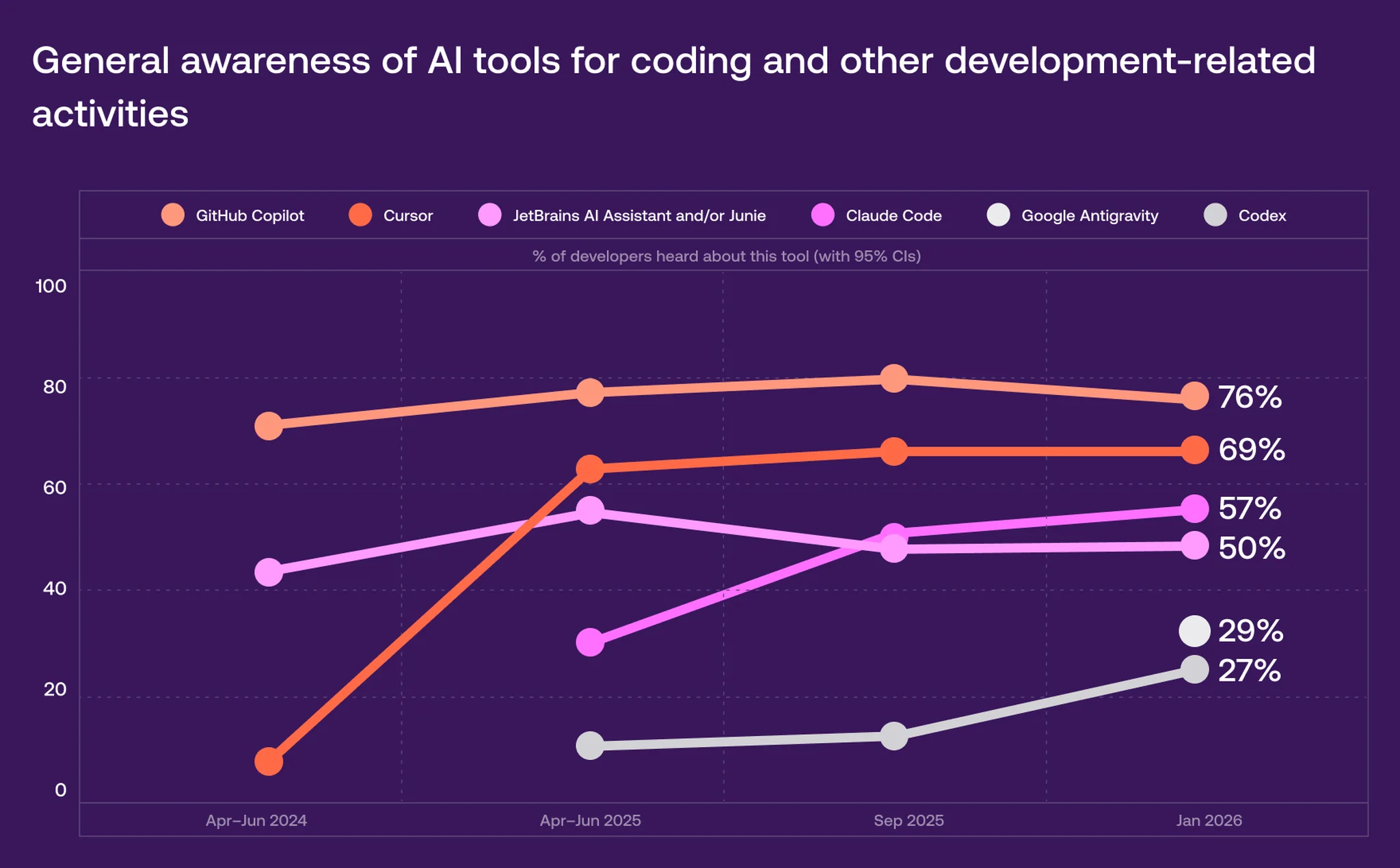
GitHub Copilot remains the best-known and most commonly used AI coding tool, especially in large enterprises: among companies with more than 5,000 employees, 40% of developers use it.
Yet, its momentum appears to have stalled: awareness and adoption have seen little movement since last year. Cursor has also seen slower growth, while Claude Code has become the outlier, with its awareness and usage continuing to rise quickly.
Developers’ usage levels of AI tools for coding and other development-related activities
Apr-Jun 2024
Apr-Jun 2025
Sep 2025
Jan 2026
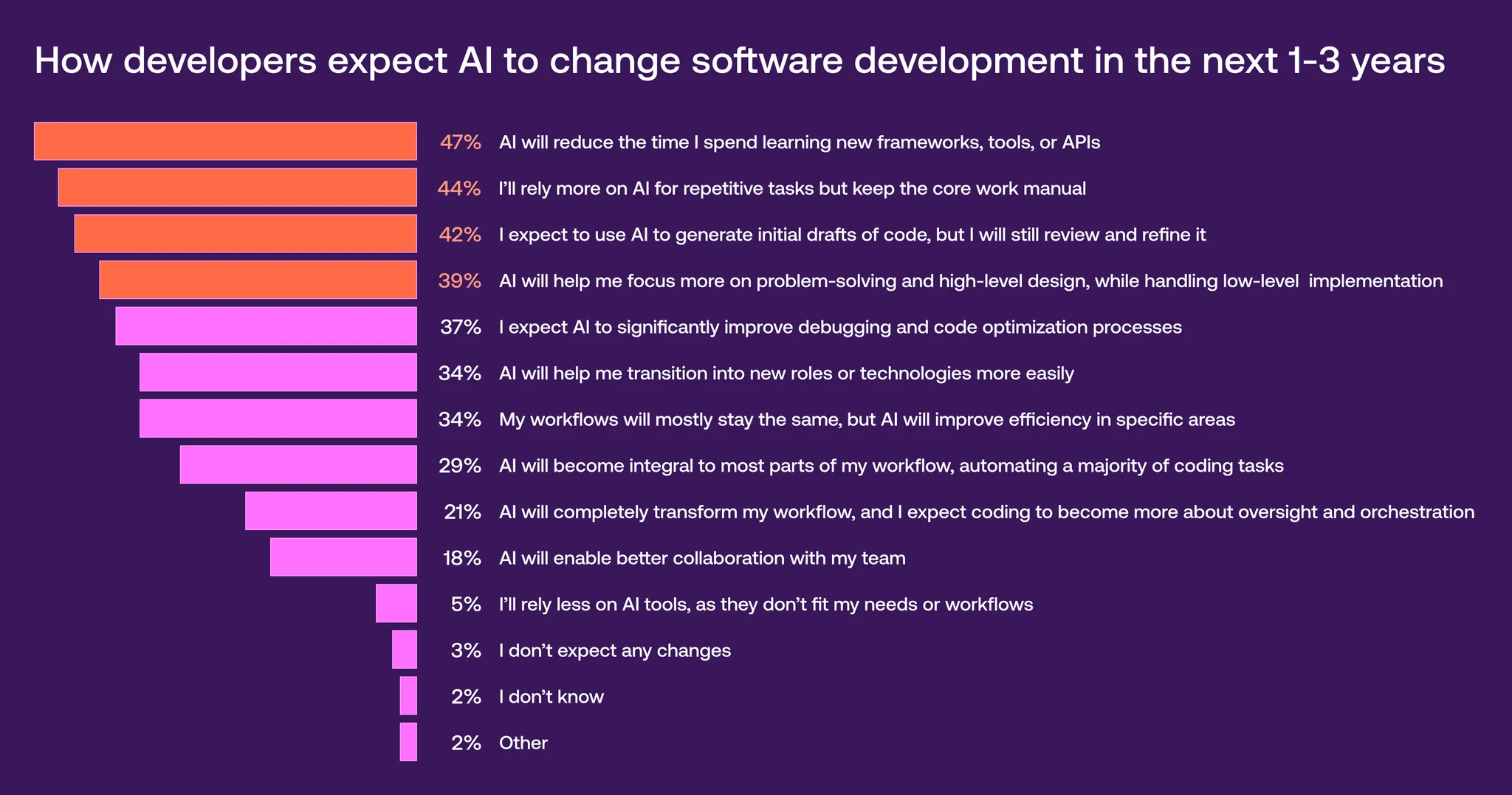
Developers’ expectations from AI in software development
Despite the growing adoption of AI, only 21% of developers believe the technology will completely transform their workflows and enable process orchestration. The majority of engineers prefer to consider AI to automate repetitive tasks, streamline learning, and generate drafts or concepts.
Impact and value of AI in software development: where AI delivers and what AI still can’t fix
The top drivers of AI adoption are practical rather than aspirational. Companies are primarily motivated by faster development, measurable ROI, and cost savings, well ahead of access to cutting-edge capabilities or competitive pressure.
Vention’s BIXA research: Which benefit is most likely to motivate your company to adopt AI in your development process?
Faster development speeds
Clear ROI/cost savings
Client demand for
AI-based features
Product personalization
Demonstrated impact
in similad business
Competitive pressure
Internal champion/leadership push
AI impact on development costs and revenue
In software engineering, 56% of companies that already deploy AI mention cost decrease. And almost the same number of companies (57%) reported revenue benefits from adopting AI in software engineering.
Reported financial impact | Share of companies |
|---|---|
Cost decrease by >= 20% | 7% of companies |
Cost decrease by 11-19% | 14% of companies |
Cost decrease by <= 10% | 35% of companies |
Revenue increase by >= 10% | 9% of companies |
Revenue increase by 6-10% | 13% of companies |
Revenue increase by <= 5% | 35% of companies |

Perceived impact of AI on code quality and developer productivity
- 73% of engineers report faster code delivery.
- 72.6% of developers who use Copilot code review said it improved their effectiveness.
- 68% of developers reported a significant time-saving of more than 10 hours per week from using AI. This is a significant jump from last year, where 54% of developers said they had yet to experience significant productivity benefits by using AI.
What impact AI has on the individual productivity of engineers
Extremely increased
Moderately increased
Slightly increased
No impact
Slightly decreased
Moderately decreased
Extremely decreased
In addition to productivity gains, many developers also report improvements in code quality. Overall, 59% of respondents say AI has had a positive impact on the quality of their code.
Perceived impact of AI on code quality
Extremely improved
Moderately
Slightly improved
No impact
Slightly worsened
Moderately worsened
Extremely worsened
Real-life cases of positive AI adoption in software development: Vention’s expertise
At Vention, internal initiatives and client engagements demonstrate the potential of AI to improve software delivery outcomes. AI-enabled development teams achieve productivity gains of 15% to 20%, while Vention clients report efficiency improvements of 2x to 3x after integrating AI into their delivery processes.
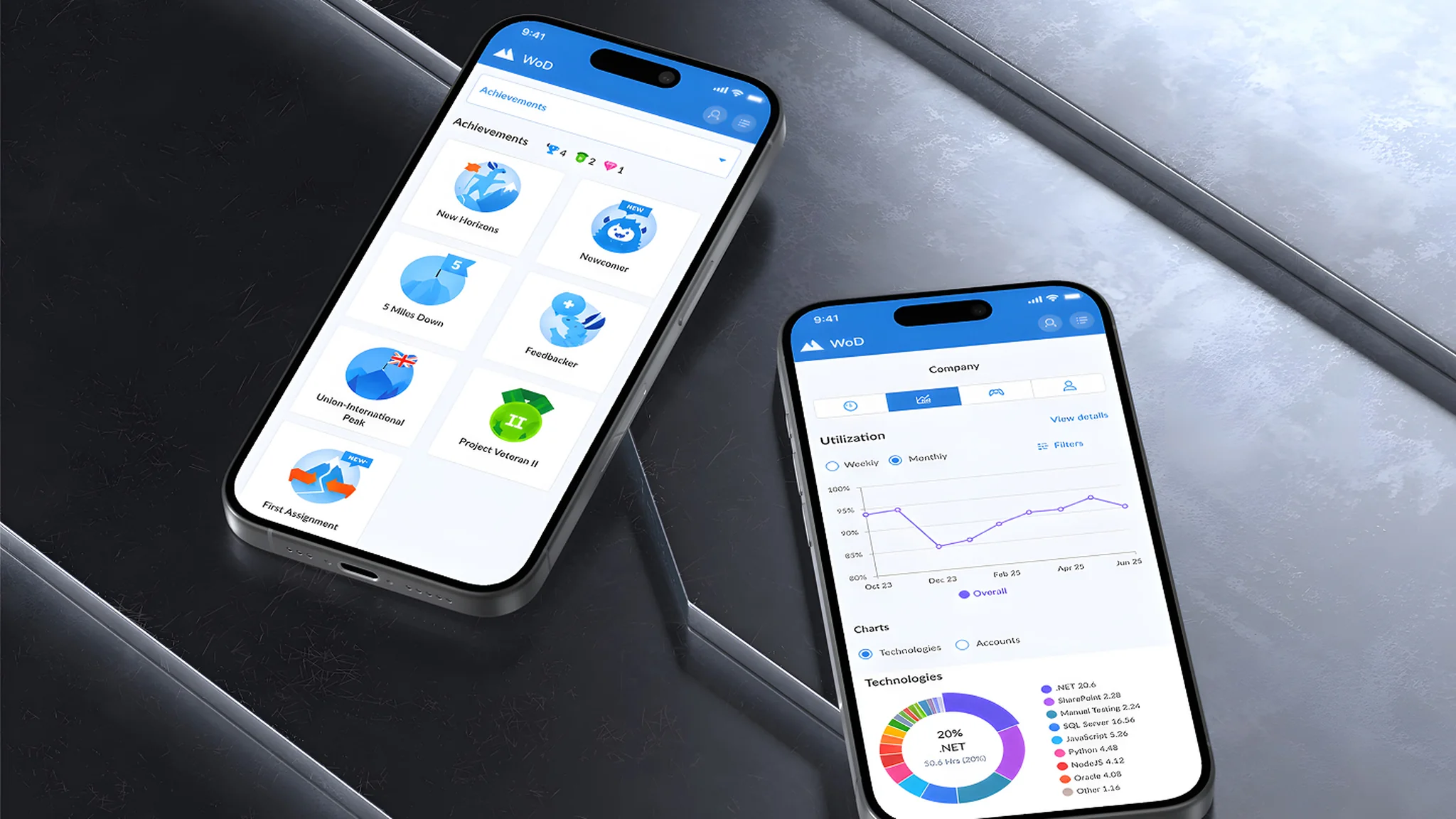
AI usage for Vention’s internal system development
For Vention’s internal World of Development platform, which includes more than 80 microservices, two million lines of code, and a fully on-premises infrastructure, AI is being integrated across the software development lifecycle. Early results include:
What Vention experts say about adopting AI in SDLC for the internal World of Development platform
Our goal is to move from an AI-augmented approach, where AI supports individual tasks and improves developer productivity, toward an AI-native model in which intelligent capabilities are deeply integrated and orchestrated across the software development lifecycle, including architecture, coding, testing, code reviews, and documentation."

Alexander Ermolayev
What Vention experts say about adopting AI in SDLC for the internal World of Development platform
We've already seen improvements of up to 90% in certain development tasks, and we're now expanding AI adoption from smaller, well-defined activities to larger and more complex engineering workflows."

Andrey Ignatenko
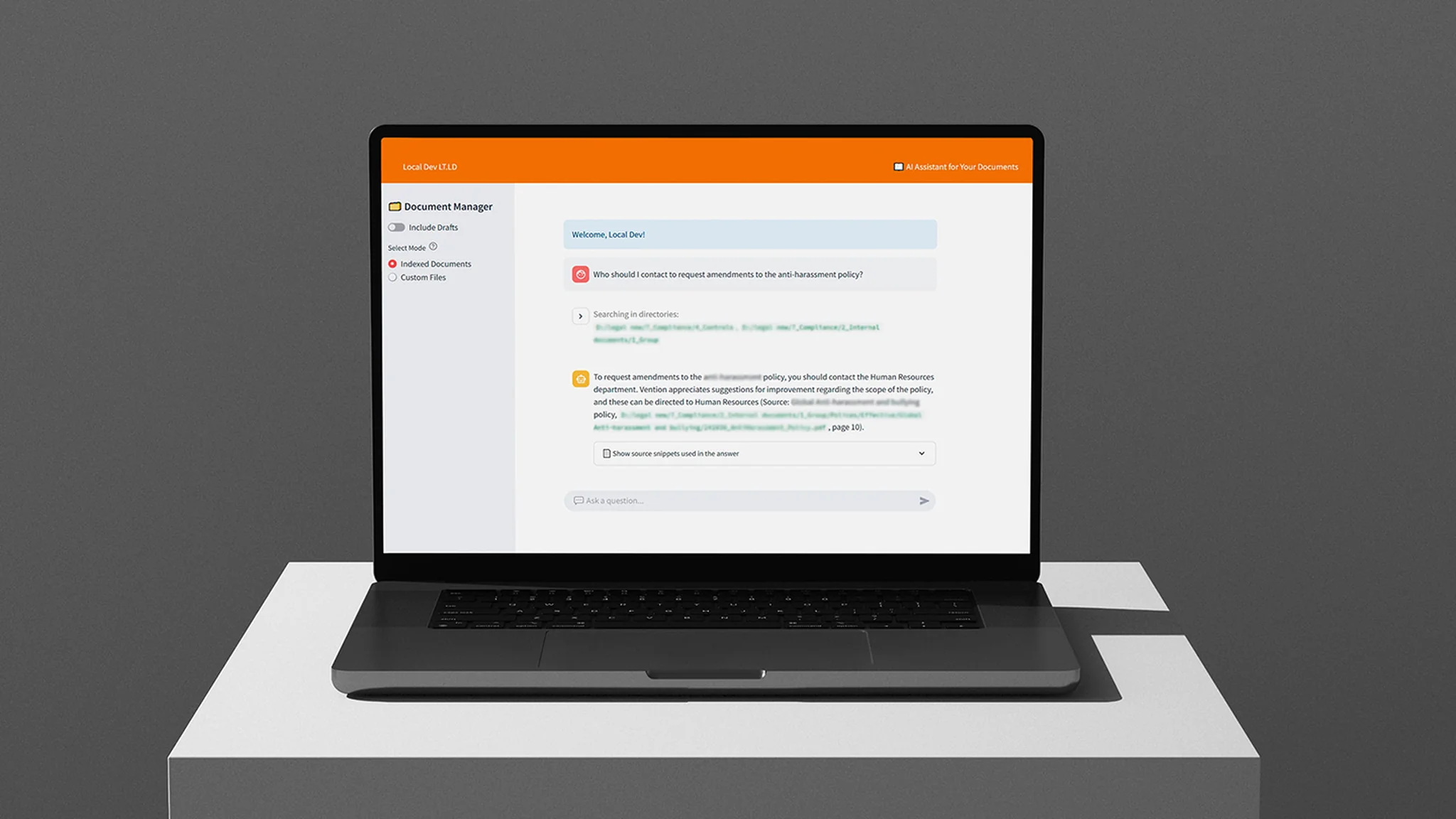
Internal solution for Vention’s legal department
Vention designed and delivered a secure internal solution that automates some of the most time-consuming legal document workflows while keeping sensitive information within a secure environment. Key capabilities include document comparison, information retrieval, AI-powered search, provision analysis, template generation, and process guidance. Internal results include:

AI-driven SDLC transformation for a fintech startup by Vention
A US-based fintech startup partnered with Vention to transform its software development lifecycle using AI across engineering workflows for its fintech platform.
The impact extended beyond code generation. AI helped increase delivery capacity, improve productivity, and enable the team to take on larger and more complex engineering initiatives. According to internal engineering analysis, by Q1 2026 the team achieved:
- AI-attributed LOC share growing from 16% in Q3 2025 to 77% in Q1 2026
- Bug share trending down from 26% in Q3 2025 to 20% in Q1 2026
- Escaped-defect proxy trending down from 36% in Q3 2025 to 30% in Q1 2026
At the same time, the team maintained human ownership of architecture, code reviews, testing, and production readiness. AI served as an acceleration layer throughout the development process rather than a replacement for engineering judgment.
What Vention expert says about using AI across the SDLC to deliver a solution for a US fintech company
For that particular client, AI helped us speed up the full development cycle. We introduced AI gradually, starting with coding assistance and documentation, then expanding to refactoring, PR reviews, testing, and codebase analysis.
The main value was that engineers could spend less time on routine work and more time on architecture, edge cases, and product decisions, while still keeping human ownership over quality and production readiness.”

Artsemi Sinitsa
Lead Software Engineer at Vention

How Vention transformed software delivery with AI for a global fintech provider
Vention initially helped scale a global fintech provider’s platform with a team of approximately 140 engineers. As the product and organisation grew, Vention launched an AI transformation initiative that introduced specification-driven development and embedded AI into engineering and QA workflows. The initiative delivered measurable improvements in speed, quality, and consistency:
Concerns around AI in software development
Despite AI's ability to generate code, documentation, and other development artifacts in seconds, many developers continue to encounter limitations that affect trust and adoption.
Developers’ frustrations | Share of respondents |
|---|---|
AI solutions that are almost right, but not quite | 66% |
Debugging AI-generated code is more time-consuming | 45.2% |
I’ve become less confident in my own problem-solving | 20% |
It’s hard to understand how or why the code works | 16.3% |
Despite AI being widely used for boilerplate coding and concept generation, developers show resistance to applying AI to deployment, code commits and reviews, and project planning:
Activity type | Share of respondents |
|---|---|
Project planning | 10.8% |
Committing and reviewing code | 10.2% |
Deployment and monitoring | 6.2% |

AI-related expenses are not the primary bottleneck
53% of users saw cost as a barrier to using agents in 2025, while this year, that’s fallen to 38% who agree or strongly agree that cost is a barrier, meaning that concerns about the costs of using AI in software development remain material but less dominant. Output accuracy and data security continue to rank among the top concerns.
AI productivity gains are still difficult to measure
By many, AI is still associated with increased software delivery instability. In a recent experiment, developers used AI tools and expected AI to speed them up by 24%.
In reality, the gap between perception and reality was striking: using AI took developers 19% longer to resolve issues, while they still believed it sped them up by 20%.
The developer experience with AI: boosting productivity or increasing load?
AI promises to increase efficiency and make work easier. At the same time, some developers report higher cognitive load and more demanding workflows, leading to what researchers describe as "AI brain fry" or mental fatigue associated with intensive AI tool usage.

AI risks in software development
According to Vention’s BIXA research, companies are mostly worried about poor code quality produced by AI and the resulting security risks. Legal concerns are also in the limelight, possibly due to regulations that are still being tested in real life and evolving.
Reasons to stop or hesitate using AI in the development process [Source: Vention Bixa Research, Q1 2026]
Concerns over code quality or security
Ethical / legal concerns
Lack of internal talent / knowledge
Too complex or technical
Too expensive
Unclear use case for our business
We already have what we need without AI
We don’t know where to start
Other
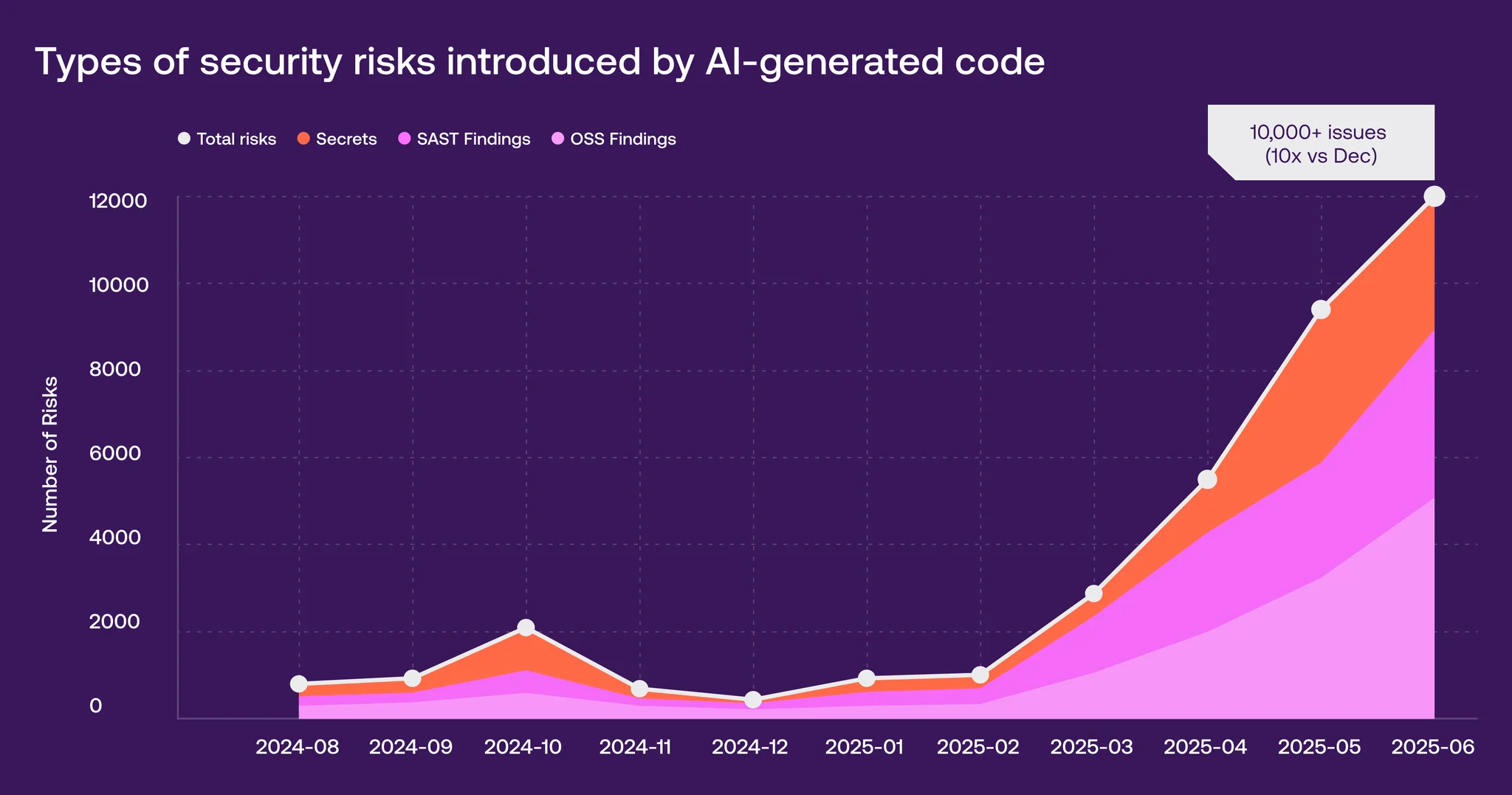
Another study highlights that AI-enabled development teams ship 4 times faster, but also create 10 times as many security issues.
AI is good at catching small stuff, but greater issues slip into production unnoticed. Thus, syntax errors dropped by 73% while architectural design flaws spiked 153%.
Hear what Vention expert says about risks of AI adoption for software development
"The headline numbers around AI-assisted development are compelling, but the risks receive far less attention. We're seeing teams ship faster, only to spend that time later untangling architectural and security issues that didn't exist before.
AI handles obvious errors well. The structural decisions it makes quietly on your behalf are a different matter entirely.
The answer isn't to slow adoption. It's to build governance into the process from the start. Specification-driven development, reviews at the right checkpoints, and measuring what actually matters in production are far more important than simply tracking how quickly code leaves the editor.
Without that foundation, velocity doesn't mean you're moving faster. It actually means technical debt is accumulating faster."

CTO of Digital Solutions at Vention, UK
Agentic AI market overview
Interest in agentic AI is accelerating rapidly. The global market was valued at $7.29B in 2025 and is projected to grow from $9.14B in 2026 to $139.19B by 2034, representing a CAGR of 40.5%.
North America remains the largest market, accounting for 33.6% of global market share in 2025. Growing enterprise adoption and continued investment in AI-driven automation are expected to remain key drivers of expansion.
The use of AI agents in software development
A growing number of organizations are experimenting with AI agents. Today, 62% report using AI agents in at least one business function.
Software engineering is following the same trend, although adoption remains slightly below the overall average.
Adoption stage | Share of respondents |
|---|---|
Fully scaled | 1% |
Scaling | 5% |
Piloting | 5% |
Experimenting | 6% |
Planning to use whinin a year | 2% |
Not using at all | 77% |
Don’t know | 2% |
Multi-agent systems adoption levels
Multi-agent systems (MAS) consist of multiple specialized AI agents that work together to complete complex tasks and workflows. Unlike standalone AI tools, multi-agent systems coordinate activities across multiple agents, each responsible for a specific role or objective.
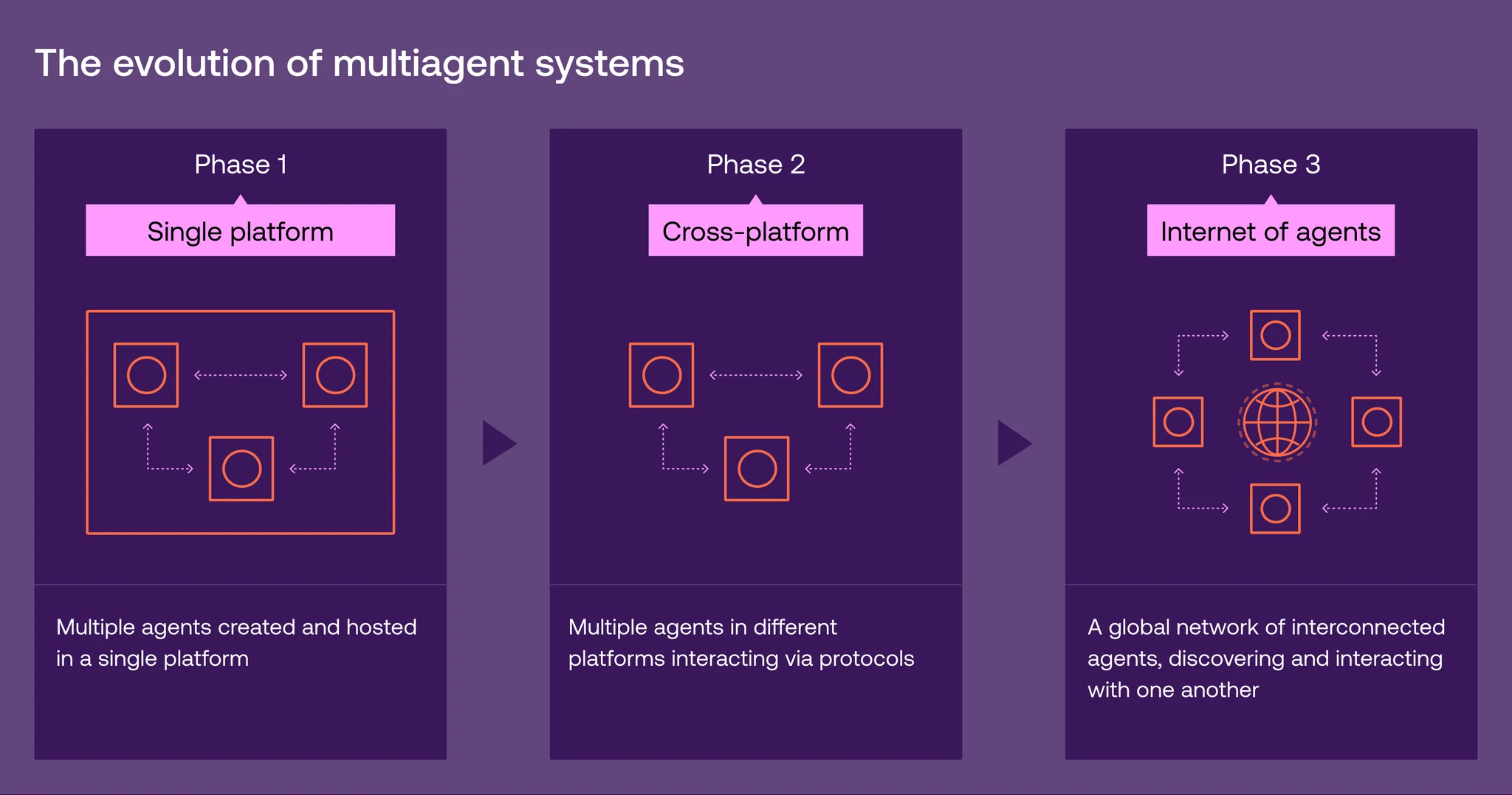
Adoption of multi-agent systems is accelerating. Today, 24% of technology organizations report developing multi-agent architectures, signaling a shift from single-model deployments toward orchestrated AI systems embedded across platforms, applications, and developer workflows.
Several indicators point to growing enterprise interest:
- Gartner reports a 1,445% increase in inquiries related to multi-agent systems between Q1 2024 and Q2 2025.
- By 2027, 70% of multi-agent systems are expected to rely on narrowly specialized agents, improving accuracy while increasing coordination complexity.
- By 2028, 60% of multi-agent systems are expected to support multivendor interoperability, enabling organizations to combine models, tools, and platforms within a single AI ecosystem.
Vention expert insight: “AI agents are only as good as the specifications behind them.”
"Modern AI agents are powerful, but the quality of their output depends heavily on the quality of the project context they receive. That's why specifications are becoming the new oil of AI-assisted software development.
When requirements, architectural decisions, constraints, edge cases, and acceptance criteria exist only in scattered chats or in individual engineers' heads, AI agents become unpredictable. When that knowledge is captured in structured specifications, AI becomes significantly more useful, consistent, and production-ready.
Frameworks such as BMad Method, OpenSpec, and GitHub Spec Kit help teams organize project knowledge, formalize requirements, and provide AI agents with a clear operating model. In other words, specifications become the shared language between engineers, stakeholders, and AI systems."

Head of AI Practice at Vention

What’s next: AI-native development platforms and vibe coding
AI-native development platforms are changing how software gets built. They include tools that can generate applications from natural language prompts, low-code and vibe coding platforms designed for non-engineers, and multi-agent systems that collaborate across software development workflows.
Adoption remains in its early stages. Today, 72% of developers do not practice vibe coding, and 73% report encountering problems with code generated using this approach.
Despite these challenges, the direction of the market is becoming clearer. Gartner predicts that by 2030, 80% of organizations will restructure large software engineering teams into smaller, AI-augmented teams, while 40% of new applications will be developed using AI-native platforms and natural language-driven development approaches.
Hear from our expert
"With the rise of AI tools, almost anyone can build the first version of an application. The cost of going from zero to one has dropped dramatically. But the need to stay focused, align around user needs, and follow a clear product strategy has never been greater.
Vibe coding gives us the ability to quickly create exactly what we want to build. That's incredibly powerful, and it accelerates many parts of the development process. But it remains a draft. Turning that draft into a production-ready system still requires deep engineering expertise and specialization.
At Vention, we're seeing more and more clients come to us with applications that started as vibe-coded prototypes. That's exciting because, for the first time in engineering history, customers can create the product they envision themselves. Our role is to help transform those ideas into reliable, secure, scalable, and extensible production systems.
AI isn't replacing the craft. It's changing how we plan, collaborate, and deliver."

CTO of Digital Solutions at Vention, DACH
Changes in workforce demand connected to AI adoption
In 2025, 76% of organizations using AI in software development said they expect to hire fewer software engineers as AI adoption expands.
Agree or disagree: “Because of AI, we won’t have to hire as many software developers this year.” [Source: Vention Bixa Research, Q1 2026]
Strongly Agree
Somewhat Agree
Somewhat Disagree
Strongly Disagree
Answer to the question: “If you had to guess, which roles are most likely to be cut this year due to AI?” [Source: Vention Bixa Research, Q1 2026]
Junior engineers
/ developers
Senior engineers
/ developers
QA / test engineers
UX/UI
DevOps
/ infrastructure
None – I don’t think AI
will cut jobs this year
Hear what Vention expert says about AI-related job cuts
"According to our research, most respondents identified junior roles as the most likely to be affected by AI this year. On one hand, that reflects executives' expectations that AI will automate routine, lower-level tasks. At the same time, our data also points to growing concern about senior engineering, QA, and DevOps roles, which require deeper expertise but also represent a higher cost to organizations.
Our findings suggest that business leaders are no longer viewing AI simply as a way to automate 'easy' work. Increasingly, they see it as a force capable of reshaping engineering teams across multiple skill levels."

Karen Pormento-Yu
Business Development Manager at Vention

Why do the same AI tools produce different business results?
McKinsey found that top-performing AI-driven software organizations achieved productivity gains of 16% to 30%, along with improvements in customer experience and time to market. Software quality also increased by 31% to 45%.
Bottom-performing organizations saw little measurable impact. Success wasn't driven by better prompts alone as it came from a stronger operating model and a more disciplined approach to AI adoption.
What high-performing AI software teams change to achieve tangible improvements
- Embed AI across the full software development life cycle, not only coding
- Redefine roles around AI-assisted delivery
- Invest in practical upskilling, shared prompts, and review standards
- Measure business outcomes, not tool usage
- Align incentives with AI-enabled behaviors
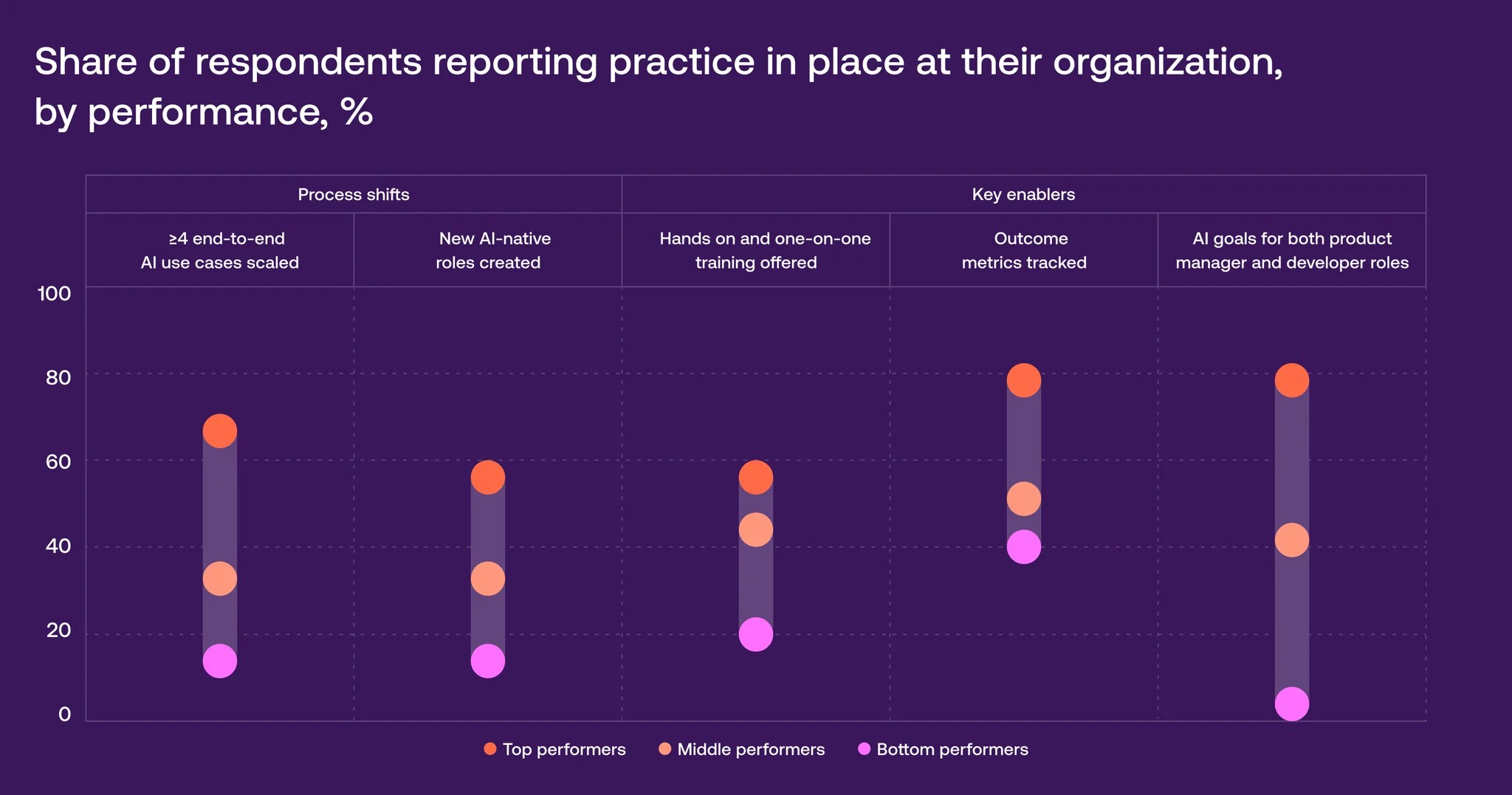
Why coding alone will not change delivery speed
Generative AI delivers the greatest value when it supports the entire software development lifecycle. Discovery, requirements, planning, design, testing, deployment, and maintenance all influence time to market.
AI coding assistants can improve individual developer productivity by 10% to 15%, but those gains often disappear if teams don't redirect the saved time toward higher-value work. Coding and testing account for only 25% to 35% of the overall delivery process, so bottlenecks elsewhere can still slow releases.
Businesses that want to accelerate software delivery need to embed AI across the entire lifecycle rather than limit it to engineering tasks.
Where most organizations are now with AI adoption
Nearly two-thirds of organizations have not yet begun scaling AI across the enterprise. Vention's proprietary five-stage AI SDLC Maturity Model helps organizations understand where they are today and what they need to do to scale AI successfully. Most companies adopting AI now remain at Stage 1 or Stage 2, the experimentation phase. Engineers use AI for individual tasks, while workflows, governance, and performance metrics remain largely unchanged.
Stage | Description |
|---|---|
1. Individual experimentation | Engineers use copilots and language models on an ad hoc basis to generate code, documentation, tests, and routine tasks. |
2. Consistent team usage | Vention introduces approved tools, data boundaries, and review standards. Shared prompts and early performance signals begin to align how teams work. |
3. Integrated AI workflow | Teams use AI with project context from repositories, tickets, and internal knowledge bases. Shared specifications guide how teams define and validate work. |
4. Orchestrated AI development | AI coordinates multi-step workflows across the lifecycle, from requirements to production-ready code, with consistent structure and validation across stages. |
5. AI-driven development | We embed AI across the lifecycle. Engineers focus on architecture, validation, and governance, while the system handles routine execution. |
The real value of AI SDLC transformation emerges at Stage 4, where AI serves as a key contributor to PRs.
Spec-driven delivery is what gets businesses to Stage 4 of the AI SDLC Maturity Model
Rather than giving AI a vague prompt and hoping for a useful result, every task is guided by a connected set of specifications that serve as a shared source of truth for AI, senior engineers, and the whole delivery lifecycle.
Business intent
Vention helps product and engineering leaders translate business priorities into clear product requirements that AI can follow with confidence and consistency.
UX specifications
Vention turns design intent into structured, machine-readable UX specifications, giving AI a clear implementation target and frontend teams a dependable source of truth.
Architecture guidance
Vention’s architects define key technical decisions through architecture records and diagrams that guide downstream implementation decisions and reduce architectural drift early.
Work decomposition
Vention turns broad initiatives into well-defined epics, stories, and design units, so AI works within clear, reviewable limits.
AI-assisted coding
Once the specification chain is in place, AI-assisted code generation happens inside defined guardrails. Engineers can review, validate, and trace the output back to the original requirements.
Embedded validation
Vention embeds validation at every stage of delivery. Automated test generation, CodeRabbit-assisted reviews, and stage-based checkpoints help surface issues before they create downstream risk.
Artifact maintenance
Vention keeps documentation, architecture records, and test assets current, so future AI-assisted work begins with a reliable foundation rather than scattered team knowledge.
How to scale AI without sacrificing quality, security, or control
DORA has outlined an AI Capabilities Model with 7 checkpoints to cross in order to amplify the outcomes of AI adoption.
Clear and communicated AI stance
Working in small batches
Healthy data ecosystems
User-centric focus
AI-accessible internal data
Quality internal platforms
Strong version control practices
AI maturity is the defining software development gap of 2026
AI adoption is now nearly universal: 93% of development professionals use AI. Yet most organizations remain at Stages 1 and 2 of Vention’s 5-Stage AI SDLC Maturity Model, where AI supports individual tasks but workflows, governance, and performance measurement remain largely unchanged.
The strongest results appear at Stages 4 and 5, where organizations restructure delivery around shared specifications, orchestrated workflows, embedded validation, and outcome-based metrics. McKinsey reports that top-performing AI software organizations achieve productivity gains of 16% to 30% and software quality improvements of 31% to 45%, while lower performers see little measurable impact.
That’s why, in 2026 the defining gap is not between organizations that use AI and those that do not. It is between those that have rebuilt software delivery around AI and those that have simply added AI to existing workflows.

Want to understand where your organization stands with AI and ensure safe AI adoption?
Vention helps teams assess AI readiness, identify high-impact SDLC use cases, and scale AI adoption with the right governance, tooling, and delivery metrics.
FAQs
How many developers use AI tools for software development in 2026?
93% of development professionals are already using AI in their product or software development today. Almost 50% of developers use AI tools daily [Source: Vention Bixa Research, Q1 2026].
Does AI improve coding productivity?
73% of engineers report faster code delivery, and 68% of developers reported saving more than 10 hours a week from using AI. Additionally, 59% of tech professionals also observe that AI has improved their code quality.
What are the benefits of AI tools in software development?
56% of companies that already deploy AI mention cost decrease, and 57% reported revenue benefits from adopting AI in software engineering.
Are AI coding agents mainstream yet?
62% of organizations are experimenting with AI agents across at least one business function, yet only 19% of software engineering companies have already scaled agentic AI or plan to do it in the near future.
How much time do developers save with AI per week?
According to Atlassian, 68% of developers reported significant time savings of more than 10 hours per week from using AI. Vention’s data from client and internal projects shows that our engineers achieve 50-70% time savings.
Sources
Vention’s proprietary BIXA research
DORA
JetBrains
Gartner
McKinsey
OpenAI
GitHub
Atlassian
METR
Harvard Business Review
Apiiro
Mordor Intelligence
Fortune Business Insight
KPMG
GitLab
Bain & Company